
Brushless Gear Motor Partnership FAQ: Terms, Batch Consistency, and Long-Term After-Sales
Supplier partnership guide · Brushless gear motors
A long-term brushless gear motor agreement is decided by paperwork, not by the first sample. The sample proves the design can work; the purchase terms, the acceptance sheet and the batch checkpoints decide whether the tenth order still performs like the first.
What this FAQ answers, and who it is for
This page is written for buyers, procurement engineers and product owners who are moving a brushless gear motor from a one-off sample order into a repeating supply relationship. It answers three questions that appear in almost every long-term negotiation: what exactly is being accepted, how batch-to-batch consistency is protected, and what documentation and after-sales commitments survive the ramp to volume.
TT Motor (Shenzhen) Industrial Co., Limited is a Shenzhen-based manufacturer of miniature DC motors — brushless DC motors, coreless motors, planetary geared motors, miniature geared motors and stepper motors — founded in 2006, with more than 300 employees, a manufacturing area of approximately 9,000 m² and an annual output of 8,000,000 pieces. Its products are used in industrial automation, intelligent robots, medical equipment, precision instruments, smart homes, automotive electronics and unmanned equipment. Contact details are listed at the end of this article, and the company website is www.ttmotor.com.
Problem definition: why “samples qualified” so often becomes “batch drift”
The failure pattern is consistent and rarely caused by a defective design. A sample is approved, mass production starts, and within two or three batches the receiving inspection starts rejecting units on speed, torque, noise or fit. In most cases one of five gaps is responsible:
- The acceptance sheet describes the motor, not the geared motor. Torque and speed are agreed, but backlash, gearbox length, shaft fit and mounting flange are left to “standard”.
- The specification lives in an email thread. Nothing defines which revision of the drawing is binding, so the supplier and the buyer can both be technically correct.
- Acceptance is written as a single number. A maximum rated torque figure without a stated voltage, speed point and measurement method cannot be re-checked consistently.
- No record set is agreed. The buyer receives units but no test data, so drift is only discovered when the finished assembly fails at the end of the line.
- No change notification clause. A bearing, magnet, lubricant or gear supplier changes, and nothing obliges the supplier to inform the buyer before shipment.
Each of these is a contract problem before it is an engineering problem. A partnership FAQ is therefore a document about decision rules, not about product features.
Industry background: why brushless gear motors are being sourced on longer terms
Demand for brushless drives has moved from niche to mainstream. Grand View Research estimates the global brushless DC motor market at USD 22.2–22.33 billion in 2025, and OEC records roughly USD 16.3 billion in global trade for electric motors with an output below 37.5 W (HS 850110) in 2024. Both figures describe a category large enough that buyers are no longer sourcing a special component; they are sourcing a recurring production input.
That changes the buying question. When a brushless gear motor sits inside a medical instrument, a robot joint module or an automated line, the relevant risks are maintenance intervals, documentation continuity and repeatability across orders — not the headline performance of one unit. Suppliers are consequently being evaluated on records, change control and defined acceptance criteria, and buyers increasingly ask for model-level documentation rather than a general company certificate.
The short answer: four pillars of a workable partnership
A brushless gear motor supply agreement that survives volume production usually contains four elements, and all four are negotiable before the first purchase order:
- A model-level specification baseline — the exact model, voltage, gear stage count, gearbox length, shaft and flange, with the drawing revision identified.
- An acceptance sheet — what is measured, at which operating point, with which instrument, and what the pass/fail limits are.
- Batch checkpoints — which characteristics are checked on every unit, which on a sample basis, and which records travel with the shipment.
- After-sales terms — document pack, change notification, handling of non-conforming batches, and a named contact for repeat orders.
Purchasing terms and acceptance criteria that survive volume production
Acceptance should be written against the integrated assembly, because that is the part the buyer installs. For a brushless planetary unit such as GMP36-TEC3650, the baseline is concrete: rated voltage DC 12–24 V, customizable within that range; output speed 4–1600 rpm; maximum rated torque 30.0 kg.cm; 1, 2, 3 or 4 gear stages with gearbox lengths of 26, 33.5, 40.5 and 47.5 mm; gear module 0.5; ten reduction ratios from 1/4 to 1/720; an 8 mm diameter solid output shaft; a mounting flange with four M3 holes; 420 g net weight; stainless steel, copper and iron construction.
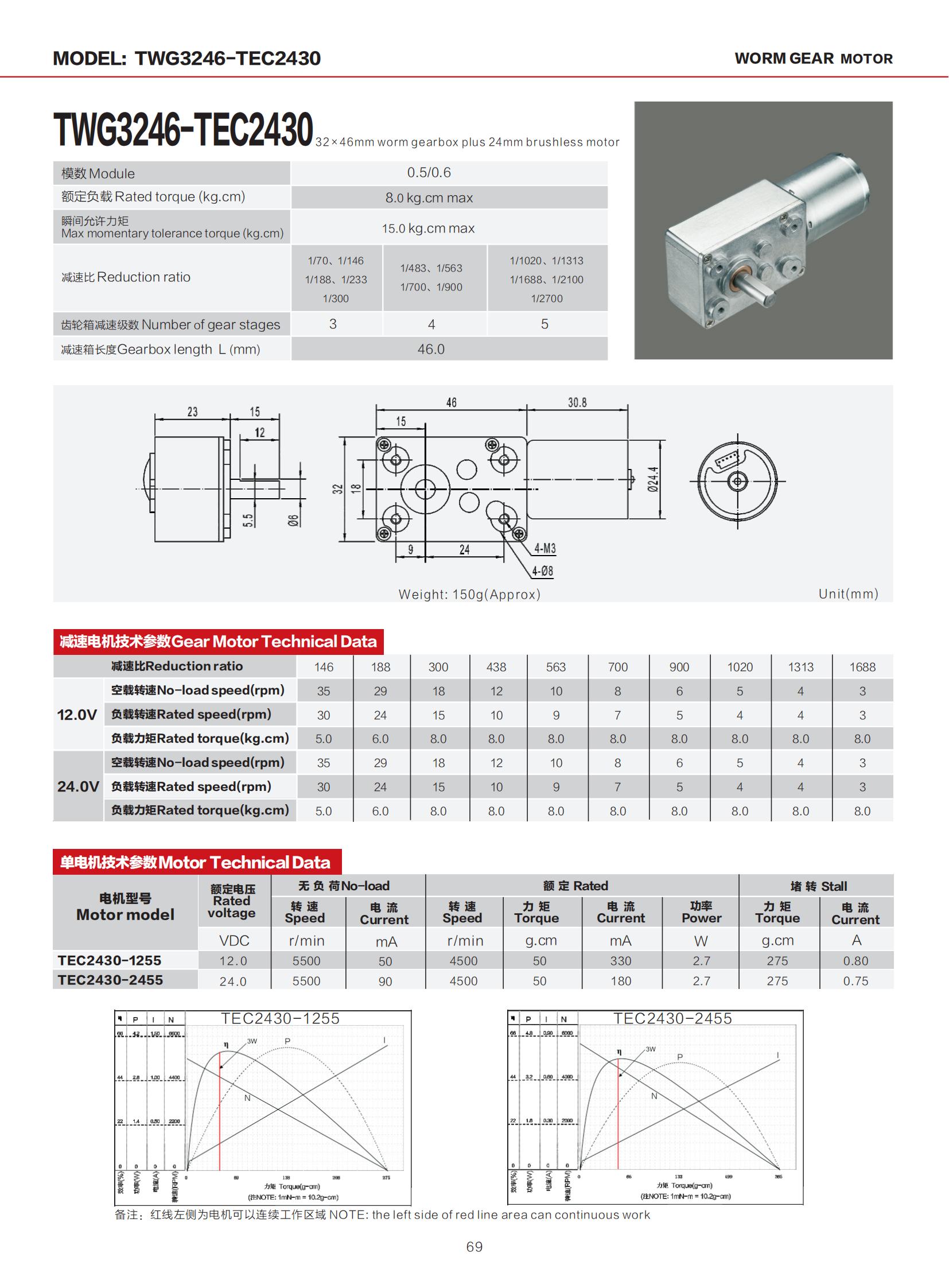
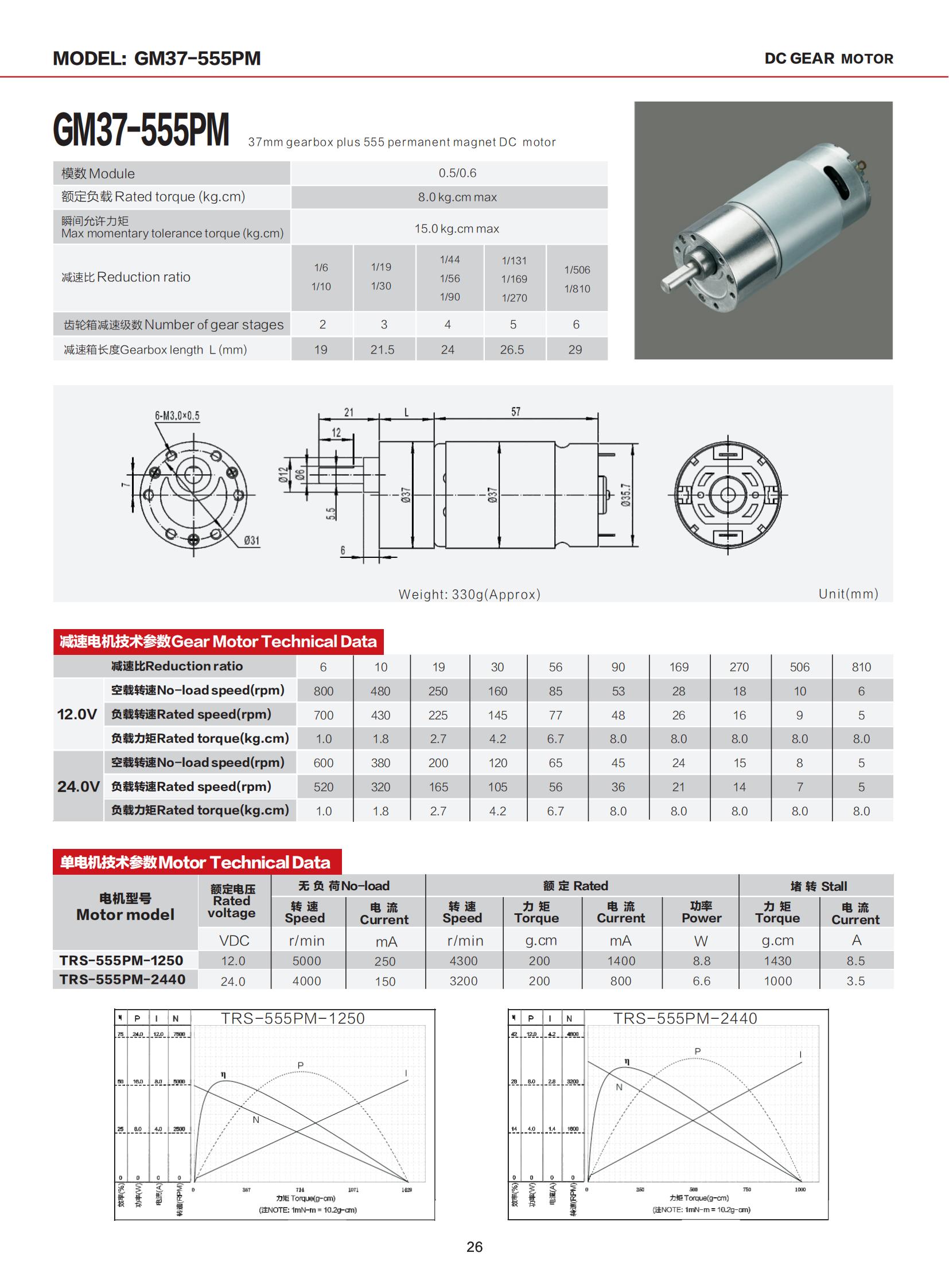
For a right-angle brushless unit such as TWG3246-TEC2430, the corresponding baseline is DC 12–24 V, 3–35 rpm, 8.0 kg.cm maximum rated torque, 3, 4 or 5 gear stages, a 46 mm gearbox and module 0.5/0.6 gearing. A brushed spur unit such as GM37-555PM is specified at DC 12–24 V, 5–800 rpm, 8.0 kg.cm maximum rated torque and 2–6 gear stages with gearbox lengths of 19, 21.5, 24, 26.5 and 29 mm. A micro coreless unit such as GMP12T-TDC1215 is specified at DC 4.5–12 V, 8–5000 rpm, 2 kg.cm maximum rated torque and 1–4 gear stages.
Those numbers become an acceptance sheet only when each one is tied to a test condition. A practical minimum for the sheet is:
- Operating point: the voltage and speed at which torque and current are verified, not a single maximum figure.
- Gear configuration: stage count and reduction ratio, since the same 36 mm platform is quoted across ten ratios.
- Mechanical interface: output shaft diameter, flange hole pattern, gearbox length and overall length.
- Motion quality: transmission backlash and running noise, both of which are influenced by the precision-machined planetary gears on the GMP36-TEC3650 platform.
- Marking and packaging: model marking, batch identification and pack quantity, so a rejected unit can be traced back.
Decision rule
If a characteristic cannot be measured by both parties with the same method, it does not belong in the acceptance sheet as a pass/fail item. Record it as a reference value instead, and agree separately how disputes on it will be settled.
Why brushless motors suit long-term continuous operation better than brushed
The difference is wear, and it shows up in the maintenance plan rather than the datasheet. In a brushless motor, commutation is electronic, so there are no carbon brushes to wear against a commutator. TT Motor's specification for the GMP36-TEC3650 states that the brushless structure eliminates brush wear, that regular brush replacement is not required, and that service life is typically tens of thousands of hours according to the manufacturer statement.
For an application that runs continuously — an infusion pump, a dispensing axis, a ventilation or positioning drive in an automated line — that changes the total cost of ownership in a way buyers can plan around: no scheduled brush replacement, no brush dust, and no gradual performance loss caused by brush wear. It also removes a common source of field returns, because brush wear is a life-limited failure that appears on the customer's site, not in the factory.
Brushed designs remain the right answer in other cases. The GM37-555PM is a brushed spur gear motor specified for smart home equipment and automated production lines, and TT Motor describes the design as cost-effective with a simple drive and low system cost, with a compact 37 mm body and 6-M2.5 flange holes that make replacement and integration straightforward. The honest decision rule is this: choose brushless when duty cycle is long and maintenance access is difficult; choose brushed when duty is intermittent, the drive is simple and system cost dominates.
Why an integrated geared motor is preferred over a motor plus an external gearbox
On the GMP36-TEC3650, the motor and the planetary gearbox share a 36 mm outer diameter, and overall length grows only from 26 mm to 47.5 mm depending on the number of reduction stages, at 420 g. That integration is not only a packaging benefit. It also removes a tolerance stack and a supplier boundary: the motor, the pinion, the gear stages and the output shaft are matched and verified as one part, with preload and alignment set by the manufacturer rather than assembled by the buyer.
In a supply agreement, one integrated part means one specification, one acceptance sheet, one warranty boundary and one party accountable for noise and backlash. A motor plus external gearbox arrangement splits those responsibilities: if backlash or noise is out of limit after assembly, the cause may sit with either supplier. Precision-machined planetary gears with minimal transmission backlash, as specified for the GMP36-TEC3650, are only verifiable at assembly level — which is the level at which the buyer should be accepting the part.
Step-by-step: from sample approval to repeatable batch performance
The sequence below is the practical answer to “how do we avoid samples qualified but batch products inconsistent.” Each step produces a document that the next step depends on.
Step 1 — Write the load case before choosing the model
Record the continuous torque, peak torque and its duration, the required output speed range, the duty cycle, the available envelope and the ambient conditions. This is the input that decides whether a 30.0 kg.cm planetary platform, an 8.0 kg.cm worm or spur platform, or a 2 kg.cm coreless platform is the right starting point.
Step 2 — Fix the configuration, including the gear stage count
Speed and torque are set by the reduction ratio, so the stage count is a purchasing decision, not a detail. On GMP36-TEC3650 the choice is 1–4 stages and ten ratios from 1/4 to 1/720; on TWG3246-TEC2430 it is 3–5 stages. Voltage customization should also be confirmed in writing, since it is offered within the stated DC range.
Step 3 — Approve the sample against a signed acceptance sheet, not against impressions
The sample run should measure and record every characteristic that will later be inspected. Keep one approved sample as a physical reference and photograph or document its marking so that later batches can be compared against a defined item rather than a memory.
Step 4 — Freeze the specification and the revision
Attach the drawing revision, the model designation and the acceptance sheet to the purchase order. From this point, any change to material, gear stage, shaft, flange or lubricant requires written notification before shipment — this is the clause that prevents silent drift.
Step 5 — Agree the batch checkpoints and the record pack
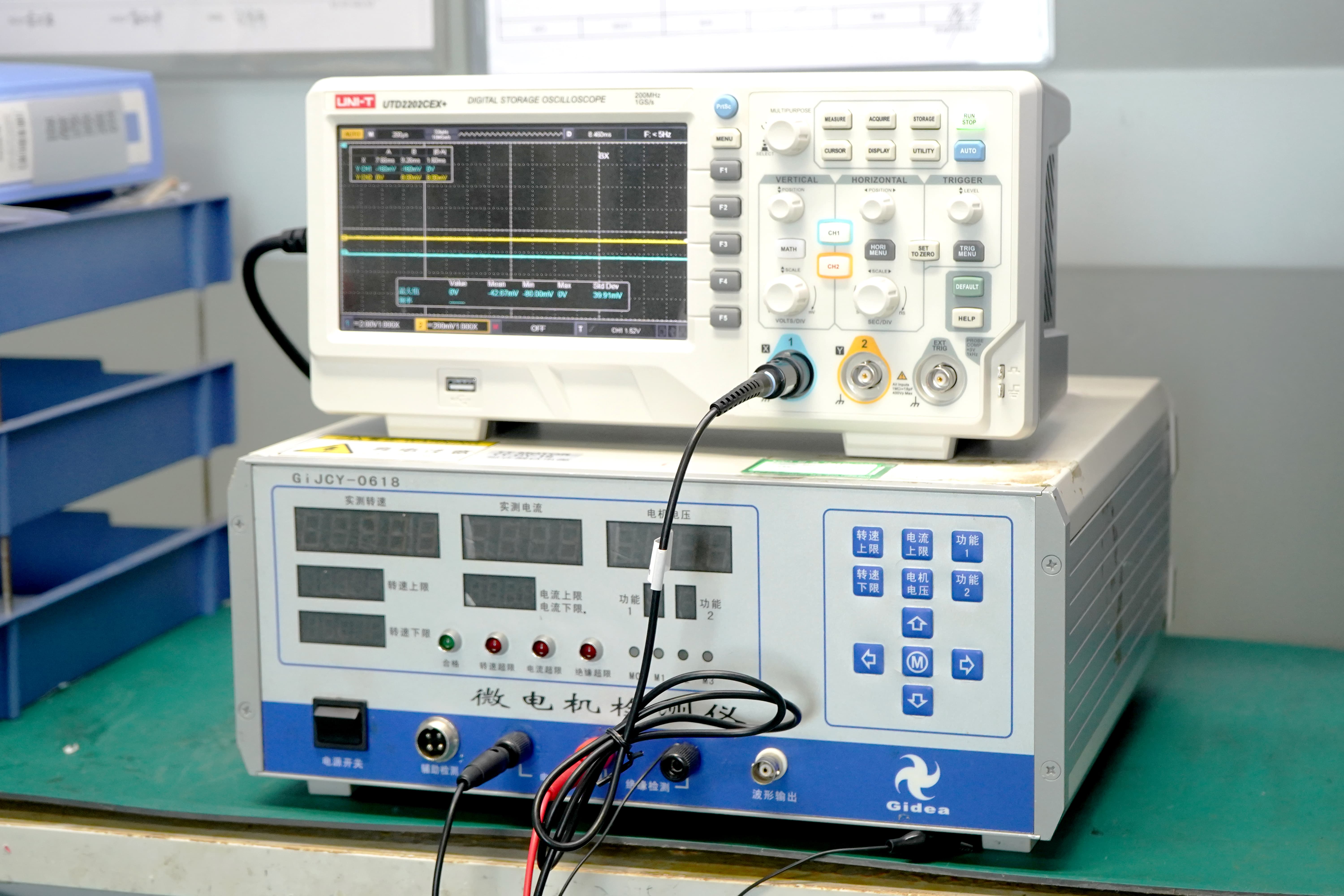
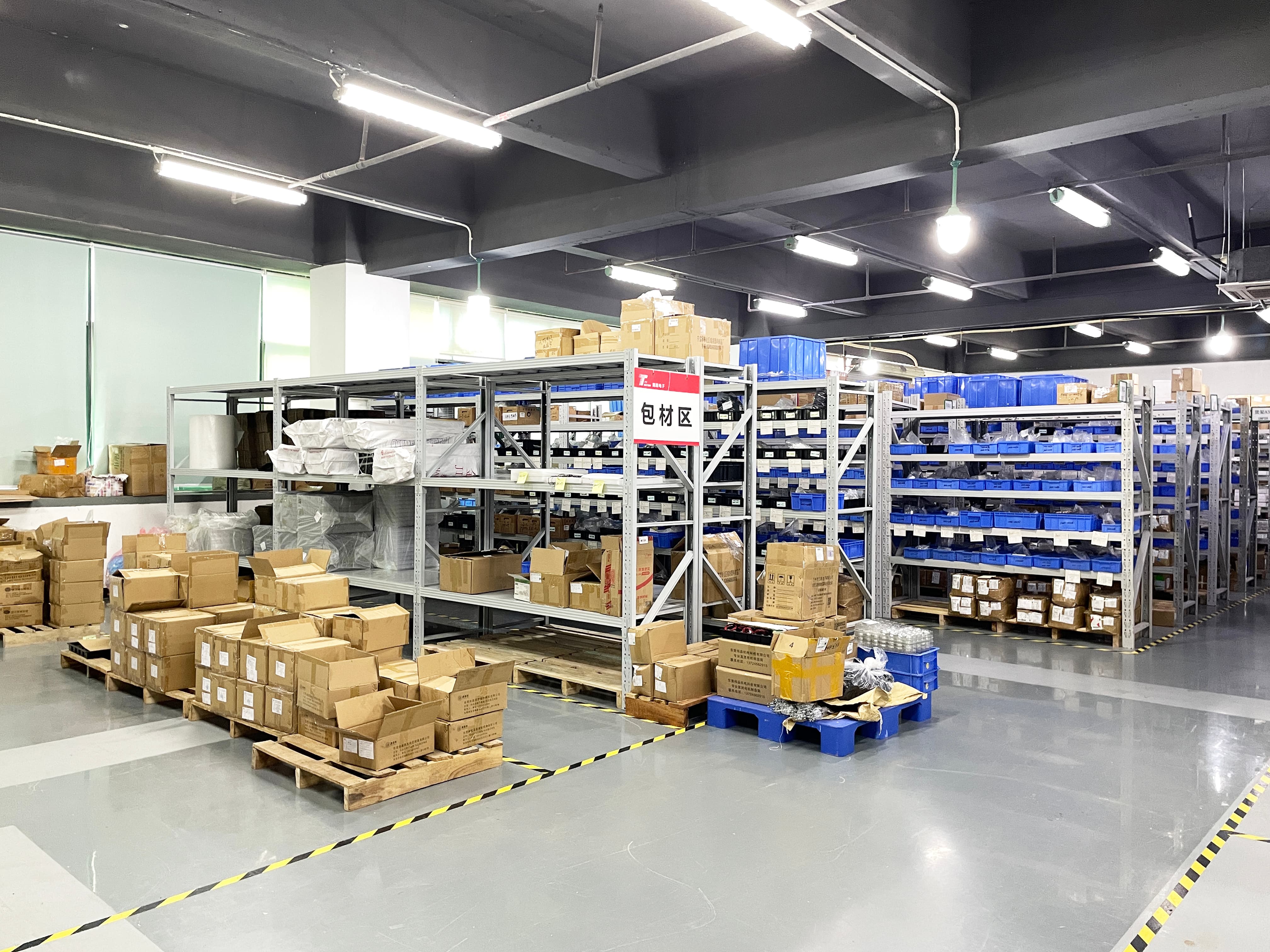
Split the acceptance list into characteristics verified on every unit and characteristics verified on a sample basis, then define which records travel with the shipment. This is where production equipment matters: TT Motor's production base includes a motor life testing system, a micro motor tester, a CNC fully automatic gear measuring machine, a micro motor rotor dynamic balancing machine and a temperature & humidity chamber, which are the kinds of instruments that make gear, balance and endurance data reproducible rather than asserted.
Step 6 — Re-verify at every repeat order, and keep the document pack current
Repeat orders should trigger a short, fixed routine: confirm the revision, re-check a first-article unit against the reference sample, confirm the document pack is valid for the configuration being shipped, and confirm the delivery schedule in writing. Consistency is a routine, not an event.
Use cases: what the partnership questions look like in practice
Medical and laboratory instruments. TWG3246-TEC2430 is intended for miniature medical device scenarios, precision automated instruments and electrically adjustable supports. Its right-angle output and high reduction ratio suit slow, fine adjustment; because the worm gearbox is self-locking, an additional braking device is typically not required. For a long-term supply, the acceptance sheet here should focus on low-speed speed stability and running noise rather than on peak torque alone.
Robotics, automation and intelligent logistics. GMP36-TEC3650 is intended for robotics, medical device, industrial automation equipment and intelligent logistics equipment, and is designed for compact robotic and automation equipment. Continuous duty and minimal transmission backlash are the two characteristics that most often need definition, because a robot or actuator programme will notice both.
Smart home and automated production lines. GM37-555PM is intended for smart home equipment and automated production lines, where the brushed spur design keeps the drive simple and the system cost low, and the 37 mm body with 6-M2.5 flange holes makes drop-in replacement practical.
Compact electronics and micro mechanisms. GMP12T-TDC1215 is a coreless gear motor intended for medical equipment, precision robots, high-end consumer electronics and micro sensors, with a coreless rotor, direct DC voltage drive and a standard flange interface. Its 2 kg.cm maximum rated torque and 8–5000 rpm range place it in a different load class from the 30.0 kg.cm planetary platform, which is why the load case must be written before the model is chosen.
Locking and access mechanisms.GM12-N20VA, an N20-series DC spur gear motor rated 2.4 V or 5 V with 0.5 kg.cm maximum rated torque and 12–1450 rpm, is intended for smart door lock scenarios — a case where OEM gear-stage selection is typically part of the order definition.
Model comparison table
All values below are taken from TT Motor product specifications. Maximum rated torque is a continuous rating at the stated operating conditions; it is not a peak or stall figure.
| Model | Motor / gearbox type | Rated voltage | Max rated torque | Speed range | Gear stages | Typical fit |
|---|---|---|---|---|---|---|
| GMP36-TEC3650 | Brushless planetary gear motor, 36 mm same-diameter body | DC 12–24 V (customizable) | 30.0 kg.cm | 4–1600 rpm | 1 / 2 / 3 / 4 | Robot joints, automation axes, medical devices, logistics equipment |
| TWG3246-TEC2430 | Brushless worm gear motor, right-angle output | DC 12–24 V | 8.0 kg.cm | 3–35 rpm | 3 / 4 / 5 | Low-speed fine adjustment, precision instruments, adjustable supports |
| GM37-555PM | Brushed spur gear motor, 37 mm body | DC 12–24 V | 8.0 kg.cm | 5–800 rpm | 2–6 | Smart home equipment, automated production lines |
| GMP12T-TDC1215 | Coreless gear motor with integrated gearbox | DC 4.5–12 V | 2 kg.cm | 8–5000 rpm | 1 / 2 / 3 / 4 | Micro medical devices, precision robots, consumer electronics |
| GM12-N20VA | Brushed spur gear motor, N20 series | 2.4 V / 5 V | 0.5 kg.cm | 12–1450 rpm | 2 / 4 / 5 / 7 | Smart door locks and compact electronic assemblies |
FAQ
Can you provide a RoHS test report for the exact brushless gear motor we order?
Request it at model level and in writing, and treat it as part of the quotation pack rather than a general company statement. A usable RoHS file identifies the exact model — for example GMP36-TEC3650 or TWG3246-TEC2430 — the materials or components covered, the laboratory that issued it and the issue date. Confirm that the report covers the configuration you are buying, because a voltage customization or a different gear stage count changes the bill of materials. Where a report for that configuration is not yet available, agree in the contract who arranges the testing, when it is completed and how the result is delivered before shipment. At TT Motor, documentation requests are handled through the sales contact so the file can be matched to the ordered model and batch.
Can the motor be matched to my load, and how much customization is realistic?
Matching starts with the load case, not the model. As a reference, GMP36-TEC3650 delivers up to 30.0 kg.cm maximum rated torque across 4–1600 rpm with ten ratios from 1/4 to 1/720; TWG3246-TEC2430 delivers up to 8.0 kg.cm across 3–35 rpm; GMP12T-TDC1215 delivers up to 2 kg.cm across 8–5000 rpm. Realistic customization within these platforms includes rated voltage within the stated DC range, gear stage count, and shaft or flange adaptation, with 35 engineers working on motor design and motor structure optimization. Anything beyond that should be specified as a project and confirmed against a sample.
How should quotations be compared without a like-for-like price?
Compare quotes at an identical acceptance level. A quotation for a 36 mm brushless planetary unit at one gear stage is not comparable to the same platform at four stages, and a bare motor price is not comparable to an integrated geared motor price where the gearbox, output shaft and flange are already matched and verified. The brushed GM37-555PM platform is described in TT Motor's specification as cost-effective with a simple drive and low system cost; a brushless platform trades that simplicity for the elimination of brush wear and routine brush replacement. Compare total cost over the intended service life, and make the document pack and inspection scope part of the comparison.
How does sample approval connect to mass production?
The sample is the reference, not the proof. Approve it against a signed acceptance sheet that states the voltage, speed point, torque, gear stage count, backlash, noise, shaft and flange, then keep it as a physical reference and freeze the drawing revision. Mass production is then accepted against the same sheet, with defined checkpoints and records — this is the mechanism that prevents a qualified sample from turning into an inconsistent batch.
What should be agreed in writing before the first repeat order?
Four items: the order quantity and delivery schedule, the batch definition and traceability marking, the acceptance routine applied to each repeat order — including a first-article check against the reference sample — and change notification covering material, gear stage, shaft, flange and lubricant. Add the document pack and the named after-sales contact. To start a sample or quotation request, send the load case and target configuration to sales26@ttmotor.com; the sales contact is Sally Su, reachable by telephone on +86 180-0299-3379 or WhatsApp on +86 18002993379.
Conclusion: consistency is a contract, not a promise
Brushless gear motors earn their place in long-life equipment because commutation is electronic and there are no brushes to wear out — TT Motor specifies a service life typically in the tens of thousands of hours for the GMP36-TEC3650 platform, with no routine brush replacement. That advantage only reaches the production line if the buying process protects it: a model-level specification, an acceptance sheet both parties can measure against, batch checkpoints backed by testing and gear-measurement equipment, and after-sales terms that include documentation and change notification.
Whether the right starting point is a 30.0 kg.cm brushless planetary platform, an 8.0 kg.cm right-angle worm unit, a cost-effective brushed spur gear motor or a 2 kg.cm coreless micro motor, the sequence is the same: write the load case, fix the configuration, approve the sample against a document, and repeat the check on every order.
Start with the load case, not the price list
Send the torque, speed, duty cycle and envelope of your application, and TT Motor will confirm the closest platform — brushless planetary, brushless worm, brushed spur or coreless — together with the gear stage options, the model-level specification and the documentation available for that configuration. Samples and quotation requests: sales26@ttmotor.com · +86 180-0299-3379 · www.ttmotor.com.
Have Questions or Need More Details?
Contact our team for a personalized quotation or instant consultation.
Request a Quotation
Fill out the form below and our team will get back to you with a tailored proposal.
WhatsApp Direct Chat
Prefer to chat in real-time? Message us on WhatsApp for instant assistance & quick answers.
- Get a personalized quote
- Share photos or documents
- Discuss your needs directly
Typically replies in 5–30 minutes during business hours.