
Urine Analyzer Motor Comparison: GM37-555PM Brushed Spur vs GMP36-TEC3650 Brushless Planetary
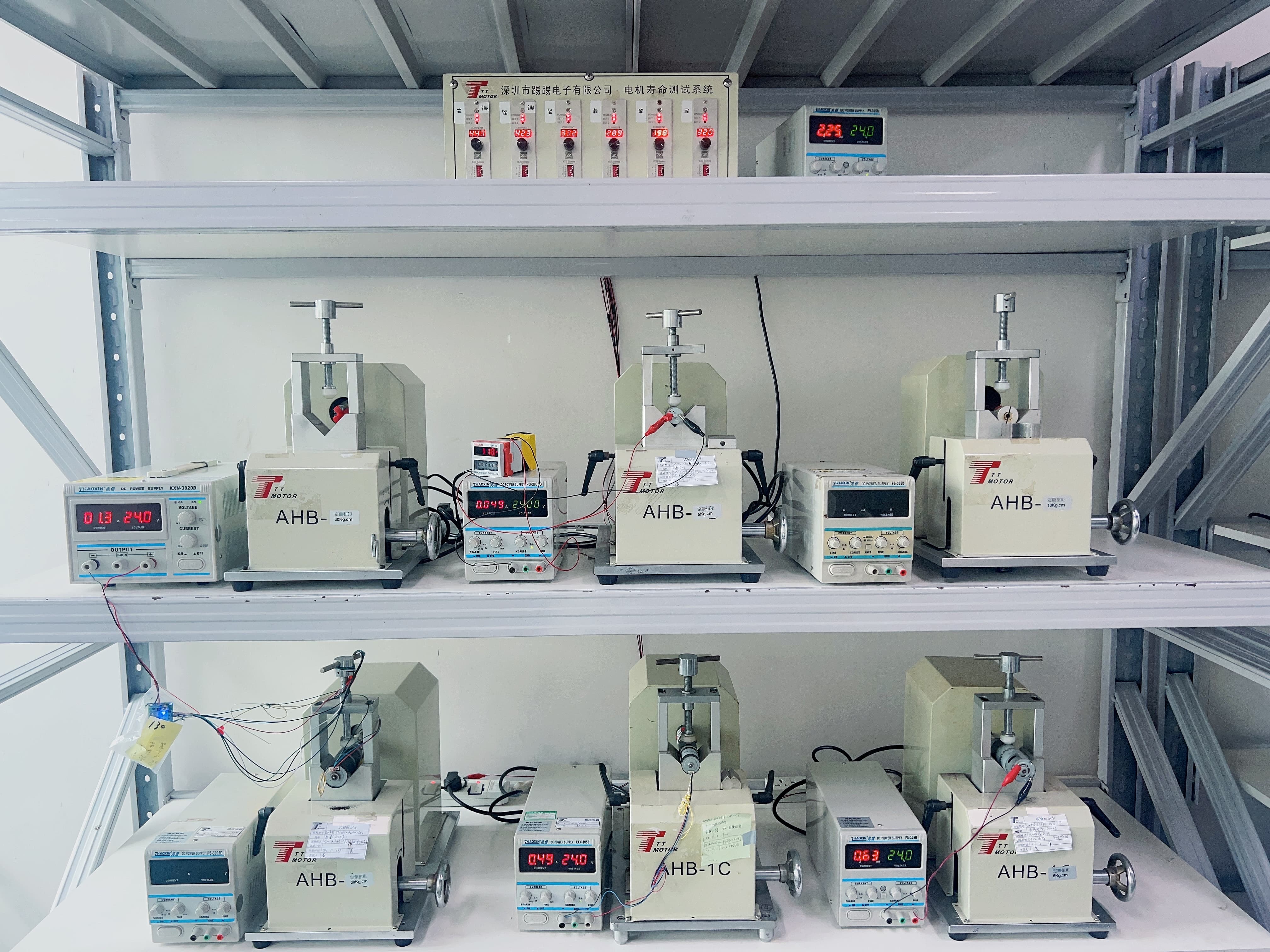
Urine analyzer and body fluid analyzer drive axes share one operating signature: low-speed precision motion, intermittent positioning moves repeated over long-term operation, and a hard requirement for low noise, low vibration and stable running. Those conditions make the drive motor a decision that is expensive to reverse, because torque headroom, envelope space and the maintenance strategy are all locked once the mechanism is designed. TT Motor (Shenzhen) Industrial Co., Limited manufactures both candidates at the centre of that decision - the GM37-555PM, a brushed DC spur gear motor, and the GMP36-TEC3650, a brushless planetary gear motor.
Answer first, using published TT Motor product data: GMP36-TEC3650 is rated DC 12V-24V, 4-1600 rpm, and up to 30.0 kg·cm maximum rated torque with 1/2/3/4 planetary gear stages. GM37-555PM is rated DC 12V-24V, 5-800 rpm, and up to 8.0 kg·cm maximum rated torque with 2/3/4/5/6 spur gear stages. The brushless model offers roughly 3.75 times the rated torque ceiling and a wider speed window; the brushed model remains the simpler drive to integrate when the torque budget fits inside 8.0 kg·cm and the axis is not continuous duty.
Quick verdict for decision-stage buyers
- Choose GMP36-TEC3650 when the axis must hold torque margin at low speed, runs long duty with frequent start and stop, or when brush service inside a sealed instrument is impractical. Brushless, DC 12V-24V, 4-1600 rpm, up to 30.0 kg·cm rated torque, planetary gear stages 1/2/3/4.
- Choose GM37-555PM when the axis is intermittent, the load stays inside the 8.0 kg·cm rated torque ceiling, the drive electronics should stay simple, and the envelope can accept a 19-29 mm gearbox. Brushed spur, DC 12V-24V, 5-800 rpm, gear stages 2/3/4/5/6.
- Check either way: a RoHS test report linked to the exact model, written acceptance criteria, and a sample-to-batch consistency plan agreed before the pilot run.
1. Problem definition: what a urine analyzer actually asks of a motor
The application profile for this axis class is narrow and well defined. Working condition: low-speed precision motion over long-term operation. Operation mode: low-speed, intermittent, positioning operation. Special requirement: low noise, low vibration, and stable operation. Unlike a consumer appliance, the analyzer runs to a throughput schedule, so a drive failure does not just degrade performance, it stops sample processing.
Five criteria decide the choice between the two motors, and only the first three can be read off a datasheet:
- Torque headroom at the gearbox output, including friction, grease drag across the operating temperature range, and alignment tolerance in the mechanism.
- Speed window overlap with the motion profile - the positioning speed, the approach speed, and any faster axis on the same platform.
- Envelope and mounting, especially gearbox length, because the axial space behind a syringe or transport track is usually already committed.
- Acoustic and vibration behaviour at the instrument's actual operating speed rather than at a catalogue reference point.
- Service strategy and documentation: whether the drive needs a maintenance interval during the instrument's service life, and whether the paperwork supports the instrument manufacturer's own compliance file.
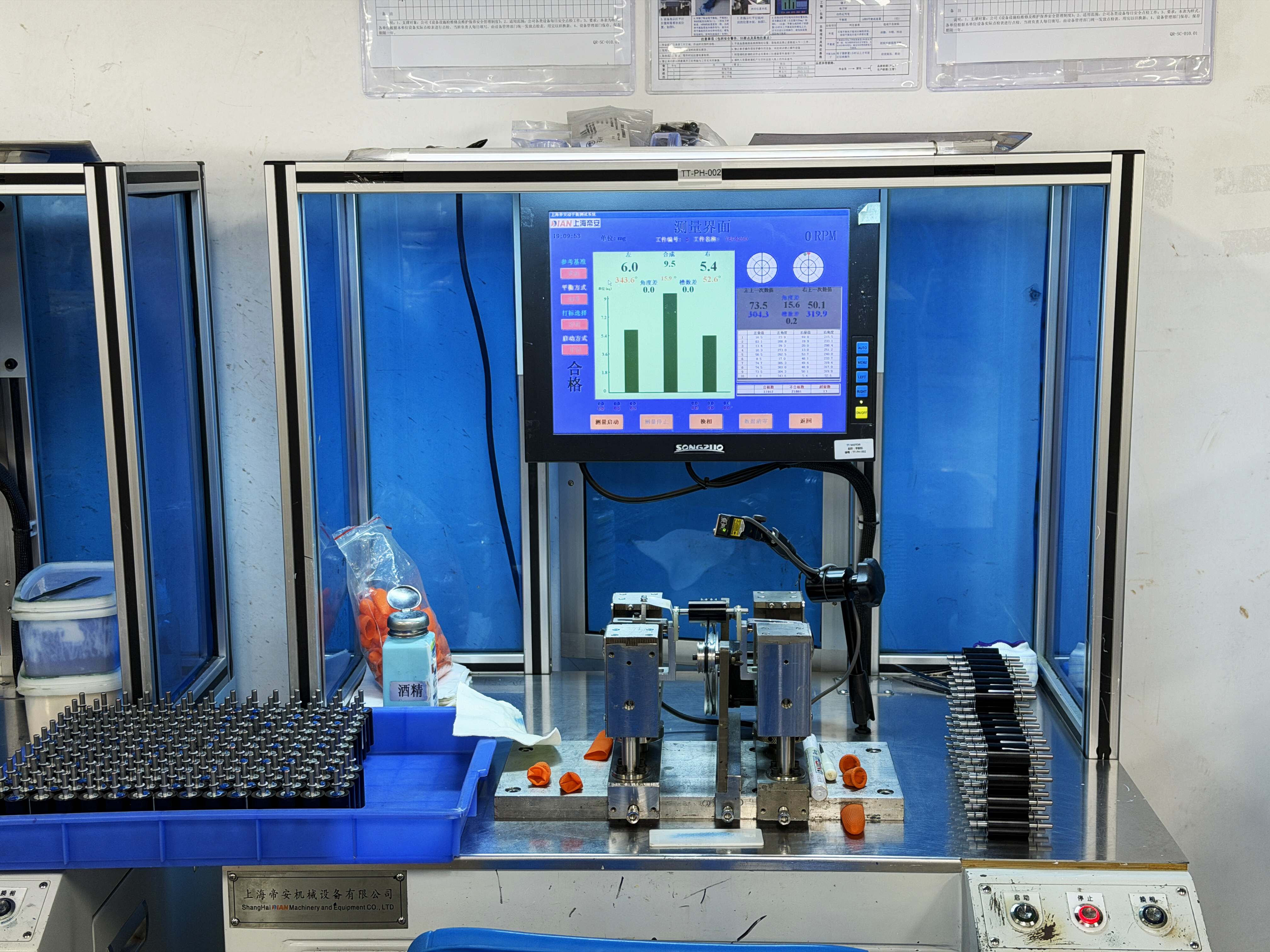
2. Industry background: where these two architectures sit
The demand context is large enough that both architectures will keep receiving engineering investment. Grand View Research sizes the global brushless DC motor market at USD 22.2-22.33 billion in 2025, with a forecast period running to 2033. On the trade side, OEC reports global export value of USD 16.3 billion in 2024 for electric motors of an output below 37.5 W (HS code 850110). That customs category is deliberately broad and does not isolate gear motor sizes such as the GM37-555PM or GMP36-TEC3650, so it should be read as the trade baseline for small motors, not as a figure for this product class.
What is changing inside instrument design is the duty expectation. Analyzers that once ran a few hours a day increasingly run extended shifts, which shifts weight from unit price toward brush-free construction in continuous and start-stop axes. This is a general trend rather than a measured replacement rate, and it is why a specification-level comparison - not a category-level one - is the useful decision tool.
TT Motor (Shenzhen) Industrial Co., Limited is a miniature DC motor manufacturer established in 2006 and headquartered in Bao'an District, Shenzhen, Guangdong Province, China. The company operates more than 300 employees across approximately 9,000 square metres of manufacturing area, three production plants, a professional assembly centre and a global marketing centre, with an R&D team of 35 engineers and annual output of 8,000,000 pieces. Around 70% of output is exported to the EU and USA. Its main products are high-precision DC motors, brushless DC motors, coreless motors, planetary geared motors, miniature geared motors and stepper motors, used in industrial automation, intelligent robots, medical equipment, precision instruments, smart homes, automotive electronics and unmanned equipment. The company profile is published at www.ttmotor.com.
3. Detailed solution: GM37-555PM vs GMP36-TEC3650, specification by specification
3.1 Rated voltage: identical, but the drive electronics are not
Both motors are rated for DC 12V-24V, so the choice does not change the supply rail. It does change the electronics around the motor. A brushed motor of this type can be driven from a DC supply directly, with speed following applied voltage and load. A brushless motor needs a driver that commutates the windings electronically, which adds a board and a component to the BOM but also moves commutation into the electronic domain.
The practical consequence for a medical instrument is worth stating both ways. Eliminating mechanical brushes removes the brush-to-commutator contact, which is where brush arcing and carbon wear debris originate in a brushed motor. Removing that contact is a real benefit in a fluid-handling instrument, where airborne particulate and electrical noise near sensitive detection optics are both unwelcome. It is not a blanket exemption from EMC work: a brushless driver still switches current electronically, so layout, filtering and validation against the instrument's own immunity requirements remain on the project plan.
3.2 Maximum rated torque: 8.0 kg·cm versus 30.0 kg·cm
This is the largest single difference between the two models. GM37-555PM is published at 8.0 kg·cm maximum rated torque; GMP36-TEC3650 is published at 30.0 kg·cm maximum rated torque. The brushless unit therefore carries roughly 3.75 times the rated torque ceiling.
For a positioning axis, that number is not about moving heavier loads alone. It is the margin available for the loads that do not appear in a nominal calculation: seal drag that rises with age, grease viscosity at the low end of the temperature range, belt or coupling misalignment, and the extra torque demanded during a fast approach move. When the rated torque of the motor is close to the nominal load torque, the axis has nowhere to go when any of those factors change.
3.3 Output speed range: 5-800 rpm versus 4-1600 rpm
Both models cover the low-speed band that a urine analyzer or body fluid analyzer actually uses - typically a few rpm up to a few hundred rpm at the output shaft. The overlap is where most positioning axes live.
The difference appears above that band. GMP36-TEC3650 reaches 1600 rpm at the output and starts as low as 4 rpm; GM37-555PM spans 5-800 rpm. If one motor family is intended to serve several axes on the same instrument platform, including a faster one, the wider brushless window reduces the number of part numbers the service organisation has to carry.
3.4 Gear stage options and gearbox length
Reduction architecture differs as well as reduction ratio. GM37-555PM is a spur gear design offered in 2/3/4/5/6 gear stages, with published gearbox lengths of 19, 21.5, 24, 26.5 and 29 mm and a module of 0.5/0.6. GMP36-TEC3650 is a planetary design offered in 1/2/3/4 gear stages, with published gearbox lengths of 26, 33.5, 40.5 and 47.5 mm and a module of 0.5.
Read the two lists together and the trade-off becomes visible. The brushed unit reaches its reduction through more spur stages packed into a shorter gearbox, from 19 mm upward. The planetary unit uses fewer stages but each stage is longer, so the assembly runs from 26 mm to 47.5 mm. In an instrument where the syringe pump or transport mechanism is already designed, that difference in axial length can decide the selection before torque does.
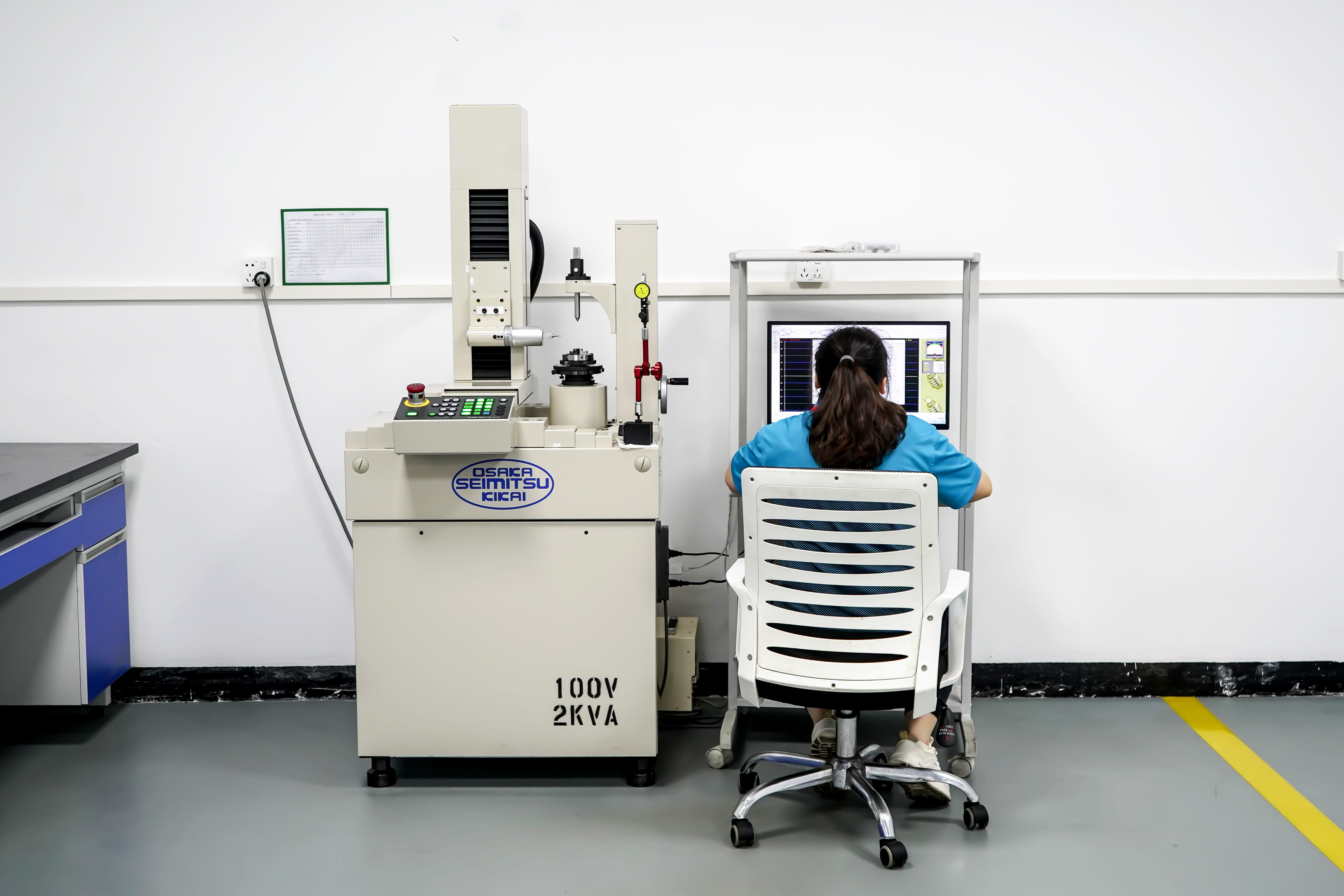
3.5 Brush wear, maintenance and efficiency
The construction difference has consequences beyond torque. Brushless motors eliminate mechanical brushes, which reduces wear; the result is no brush wear and low maintenance requirements. Typical efficiency also differs: brushless motors typically run at about 85%-90% efficiency, while brushed gear motors commonly run at about 70%-80%, depending on the model and operating conditions.
Purchase economics follow the same split. The unit price of a brushless motor is usually higher than a brushed equivalent, but long-term maintenance and replacement costs may be lower, so the useful comparison is unit price plus brush service and downtime across the instrument's expected service life. Equipment that operates for extended periods, starts and stops frequently, and requires minimal maintenance is the natural fit for the brushless option.
3.6 Application scope published for each model
The published application lists are not identical, and buyers should notice that. GMP36-TEC3650 is listed for robots, medical devices, industrial automation equipment and intelligent logistics equipment. GM37-555PM is listed for smart home, automated equipment and automated production lines.
The honest reading is that the brushless model already sits inside a medical device application list, while the brushed model sits inside automation and appliance lists. That does not disqualify the brushed motor from an analyzer axis - it means an analyzer project using GM37-555PM should validate duty cycle, noise and vibration against the instrument specification earlier, rather than assuming an existing medical reference. Both models use stainless steel, copper and iron as published materials, so material declarations are comparable.
3.7 If neither standard version fits the axis
Customization is a third option alongside the two catalogue builds, and for OEM/ODM projects it is often the deciding one. TT Motor supports OEM/ODM projects, small to medium batch projects and special size equipment, with shorter communication links and more flexible responses to engineering changes than standard product supply.
TT Motor's customization position states that, on the same outer diameter, longer stators and rotors can raise torque density by 20% to 40%, or shorten overall motor length by 15% to 30% at the same torque requirement - the second figure is what matters when the gearbox envelope, not the motor body, is the constraint. Shaft diameter customization can also remove intermediate couplings and transition supports. Standard products may be cheaper initially, but the overall cost of a customized project is not necessarily lower; the return is tailored fit rather than a lower price.
4. Step-by-step: how to choose between the two motors
The sequence below reflects the order in which each decision actually constrains the next one.
- Write the duty profile. Continuous or intermittent, moves per hour, hours per day, and target service life. This single input decides whether brush wear is a maintenance item at all.
- Calculate required torque with margin. Sum load torque, friction and acceleration torque, then add margin for seal drag and temperature. Compare against 8.0 kg·cm and 30.0 kg·cm maximum rated torque.
- Fix the speed window. Define the slowest positioning move and the fastest axis on the platform, then check against 5-800 rpm and 4-1600 rpm.
- Check the envelope in millimetres. Compare the available axial space against 19-29 mm and 26-47.5 mm gearbox lengths, and confirm the mounting and shaft interface.
- Decide the control architecture. Simple DC drive for the brushed unit, or a commutation driver with the associated board space, BOM line and EMC validation for the brushless unit.
- Define the maintenance strategy. If the drive cannot be serviced without removing the instrument from service, that requirement pushes the decision toward the brushless construction.
- Assemble the document set before ordering. Request a RoHS test report naming the exact model, and confirm how acceptance criteria will be expressed: speed tolerance, no-load current, torque check point, gear stage and dimensional limits.
- Run a sample, then verify batch consistency. Validate the sample against both the drawing and the published specification, then confirm how the production lot will be checked against the approved sample before the batch is released.
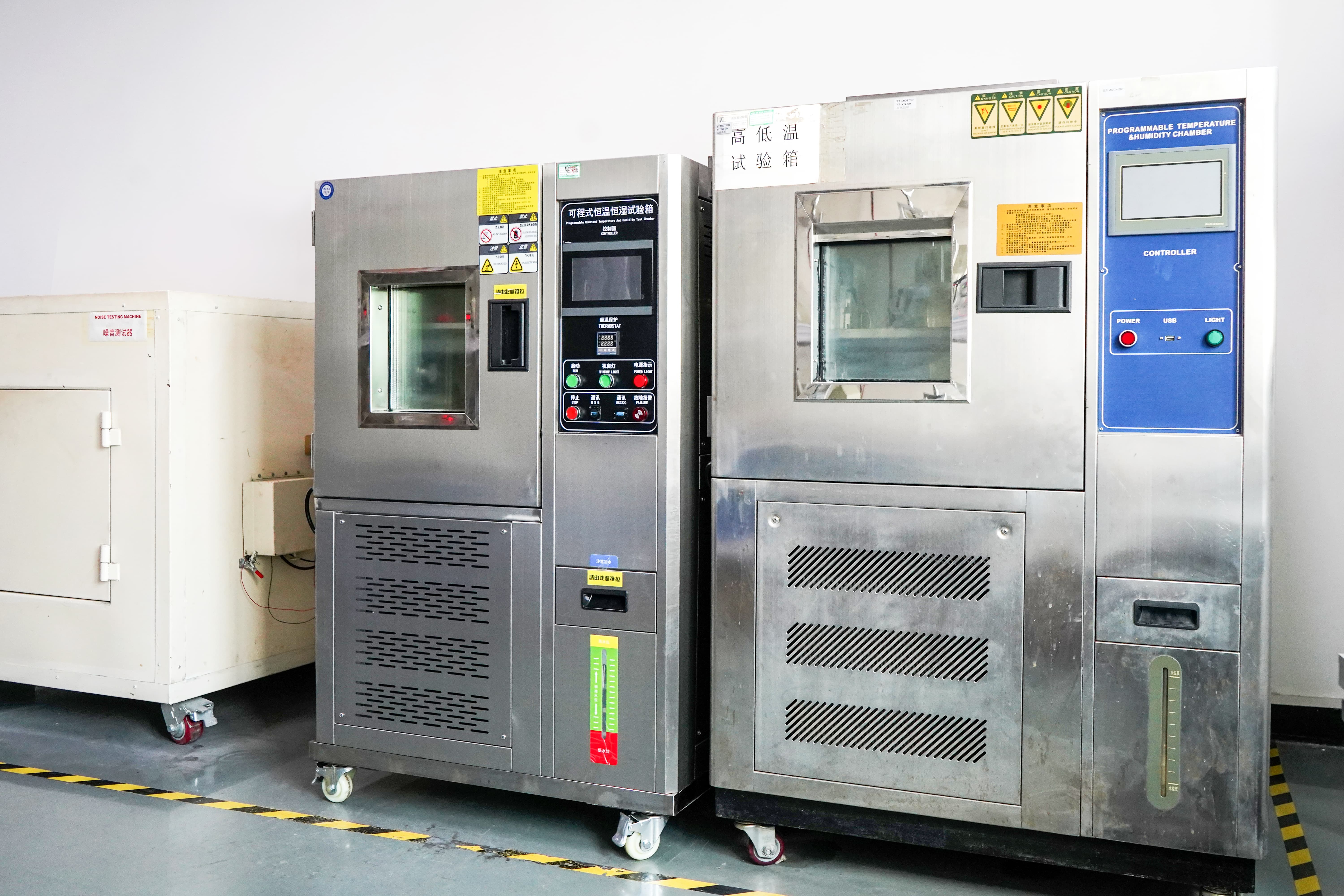
5. Use cases in urine and body fluid analyzer projects
5.1 Intermittent transport or positioning axis
A transport track or sample positioning axis that moves for a few seconds at a time, several times per minute, is the case where GM37-555PM deserves evaluation first. The 5-800 rpm window covers the motion profile, the 19-29 mm gearbox lengths suit a compact mechanism, and the 8.0 kg·cm ceiling is workable if the moving mass and friction are modest. The check to run before design freeze is acoustic and vibration behaviour at the actual positioning speed, plus a duty-cycle calculation to confirm brush wear stays outside the instrument's service interval.
5.2 Long-duty pipetting or reagent arm
An axis that runs extended shifts, starts and stops frequently, and sits inside a housing that is not opened during routine service is the clearest brushless case. GMP36-TEC3650 combines a 30.0 kg·cm rated torque ceiling, a 4-1600 rpm window, planetary stages and brush-free construction, and it is already listed for medical devices. The reduced-maintenance expectation and the absence of brush wear debris are the arguments that usually close this decision.
5.3 Multi-axis platforms and OEM variants
Where one instrument platform carries several motorised axes, choosing the wider brushless speed window reduces the number of spare part numbers in field service. Where no catalogue build matches the mechanism, the OEM/ODM route allows stator and rotor length, shaft diameter and gearbox configuration to be matched to the axis, at the cost of a project-based rather than catalogue-based commercial model.
6. Comparison table: GM37-555PM vs GMP36-TEC3650
| Parameter | GM37-555PM | GMP36-TEC3650 |
|---|---|---|
| Motor type | DC brush spur gear motor | DC brushless planetary gear motor |
| Rated voltage | DC 12V-24V | DC 12V-24V |
| Output speed range | 5-800 rpm | 4-1600 rpm |
| Maximum rated torque | 8.0 kg·cm | 30.0 kg·cm |
| Number of gear stages | 2/3/4/5/6 | 1/2/3/4 |
| Gearbox length | 19/21.5/24/26.5/29 mm | 26/33.5/40.5/47.5 mm |
| Module | 0.5/0.6 | 0.5 |
| Materials | Stainless steel, iron, copper | Stainless steel, copper, iron |
| Brush wear and maintenance | Mechanical brushes present; brush wear is a service consideration | Mechanical brushes eliminated; no brush wear, low maintenance requirement |
| Typical efficiency | About 70%-80%, depending on model and operating conditions | About 85%-90%, depending on model and operating conditions |
| Purchase economics | Lower unit price typical; replacement and service costs sit with the buyer | Unit price usually higher; long-term maintenance and replacement costs may be lower |
| Published application areas | Smart home, automated equipment, automated production line | Robots, medical devices, industrial automation equipment, intelligent logistics equipment |
| Best fit | Intermittent, low duty, torque inside 8.0 kg·cm, compact envelope | Extended operation, frequent start and stop, minimal maintenance, higher torque headroom |
7. FAQ
What RoHS documentation should be verified before a urine analyzer motor is approved?
Request a RoHS test report that names the exact motor model rather than the catalogue family, and check that the report scope covers the materials actually used in the unit. Both GM37-555PM and GMP36-TEC3650 use stainless steel, copper and iron, so material declarations should match those inputs. Record the report identifier, model and date in the purchase order, and keep the motor documents traceable to the batch. Regulatory clearance for the finished analyzer itself stays with the instrument manufacturer.
Which motor has more torque and speed headroom, GM37-555PM or GMP36-TEC3650?
GMP36-TEC3650 has the larger published envelope: up to 30.0 kg·cm maximum rated torque and a 4-1600 rpm output speed range, against 8.0 kg·cm and 5-800 rpm for GM37-555PM. Both are rated for DC 12V-24V. Reduction is also reached differently: the brushless unit uses 1/2/3/4 planetary gear stages in a 26-47.5 mm gearbox, while the brushed unit uses 2/3/4/5/6 spur gear stages in a 19-29 mm gearbox.
Is the brushed GM37-555PM cheaper to run than the brushless GMP36-TEC3650?
Not necessarily over the life of the instrument. Brushless motors usually carry a higher unit price, while long-term maintenance and replacement costs may be lower because there is no brush wear. Typical efficiency also differs, with brushless motors at about 85%-90% and brushed gear motors at about 70%-80%, depending on the model and operating conditions. The realistic comparison is unit price plus the cost of brush service and downtime across the analyzer's expected service life.
What should be validated in a sample before a batch order is placed?
Validate the sample against the drawing and the published specification at the same time: gearbox length and mounting interface, output speed at the DC 12V-24V rated input, available torque against the axis load, and noise and vibration at the analyzer's operating speed. Agree written acceptance criteria before the pilot run - speed tolerance, no-load current, torque check point, gear stage and dimensional limits - and confirm how sample-to-batch consistency will be demonstrated on the production lot. TT Motor maintains a product testing system and a mass production management system to support this stage.
How do we move from sample approval to a production order?
Send the axis requirements for quotation: duty cycle, required torque, target speed, available envelope and supply voltage. TT Motor supports OEM/ODM projects and small to medium batch projects, with shorter communication links and more flexible responses to engineering changes than standard product supply. Requests can be sent to the TT Motor sales team at sales26@ttmotor.com, by WhatsApp on +86 180-0299-3379, or through www.ttmotor.com.
8. Conclusion: the deciding variable is duty, not price
Torque and speed figures make the GM37-555PM versus GMP36-TEC3650 decision look mechanical: 8.0 kg·cm against 30.0 kg·cm, 5-800 rpm against 4-1600 rpm, 19-29 mm against 26-47.5 mm of gearbox length. The variable that usually settles the choice in a urine analyzer or body fluid analyzer project is duty. An intermittent axis with modest load, driven from a simple DC supply, can be served inside the 8.0 kg·cm and 5-800 rpm envelope of the brushed spur model, provided noise and vibration are validated at the real operating speed. An axis that runs extended shifts, stops and starts constantly, or must not be opened for brush service during the instrument's life belongs in the brushless planetary model, where the elimination of mechanical brushes - and of brush wear - changes the maintenance expectation rather than only the performance number.
Whatever the outcome, the purchasing work is the same: get a RoHS test report tied to the exact model, agree acceptance criteria in writing, and treat the approved sample as the reference for batch release.
Request a sample or a quotation
Send the axis duty profile, torque requirement, speed window and available envelope to the TT Motor team and specify whether you are evaluating GM37-555PM or GMP36-TEC3650. Samples, pricing and lead-time confirmation are handled per project.
Email: sales26@ttmotor.com · WhatsApp: +86 180-0299-3379 · Website: www.ttmotor.com · Blog: blog.ttmotor.com
Download the full product catalogue: TT Motor Brochure (PDF)

Have Questions or Need More Details?
Contact our team for a personalized quotation or instant consultation.
Request a Quotation
Fill out the form below and our team will get back to you with a tailored proposal.
WhatsApp Direct Chat
Prefer to chat in real-time? Message us on WhatsApp for instant assistance & quick answers.
- Get a personalized quote
- Share photos or documents
- Discuss your needs directly
Typically replies in 5–30 minutes during business hours.