Custom Brushless Motor OEM: A 2026 Buyer's Checklist
A custom brushless motor project is usually lost at the specification handoff, not on the test bench. The question that separates a capable supplier from a catalog reseller is narrower than “can you build a brushless motor”: it is whether that supplier can hold one custom DC gear motor design stable from a two-piece sample through a multi-thousand-piece batch, with compliance documents that name the exact model on the purchase order. This guide sets out the evaluation criteria, the platform data and the process controls that answer that question.
It is written for buyers in the evaluation-to-execution stage — design engineers, procurement managers and product teams who already know their application and are now choosing which China manufacturer can deliver a customized brushless (BLDC) or brushed DC gear motor. TT Motor (Shenzhen) Industrial Co., Limited is used as the reference case throughout, because its published customization scope, platform specifications and certificate numbers let each criterion be checked against something concrete rather than a promise. The company has manufactured miniature DC motors since 2006 and is headquartered in Bao'an District, Shenzhen, Guangdong Province, China.
Problem Definition: Why Custom DC Motor Projects Stall
A custom motor design is a motor whose key variables are set by the application rather than by the supplier's catalogue. In practice, the winding, gear ratio, shaft geometry, encoder, supply voltage and target output speed have all been defined jointly by buyer and manufacturer, and the resulting part number exists only for that buyer.
Three failure modes account for most of the delay in that process.
- An under-defined RFQ. “12 V, high torque, low noise” leaves the manufacturer guessing the load point, duty cycle and acoustic target. The first sample then measures well on a bench but behaves differently inside the finished device.
- Sample-to-batch drift. The samples perform correctly and the mass-production units do not. This is a process-control failure, not a design failure.
- Documentation that does not match the part. A RoHS or EMC report covering a related series model, but not the exact ordered variant, creates a compliance gap that only surfaces at customs or at a customer audit.
The second failure mode deserves the most attention during supplier evaluation, because it stays invisible until volume production. Its recognised triggers are specific: substituting raw materials or components after sampling; failing to lock the sample process before mass production; supplying too few samples to reflect batch consistency; changes in production equipment or mould status; and weak parameter control between batches.
The corresponding controls are equally specific, and they are the ones a buyer should demand in writing: no “special machine adjustments” reserved for samples; no switch from material A at sampling to material B in production; a small-batch trial run before full production; defined sampling or full-inspection rules for key parameters; and a traceability system able to locate the source of a deviation quickly.
Industry Background: What the 2026 Numbers Do and Do Not Tell You
The demand context is well documented, but the data needs reading before it is used in a sourcing decision. Grand View Research values the global brushless DC motor market at USD 22.2–22.33 billion for the 2025 base year, with a forecast period running to 2033. At the small-motor end, electric motors with an output below 37.5 W (HS code 850110) represented USD 16.3 billion in global export value in 2024, according to OEC trade data.
That second figure illustrates a recurring trap. HS 850110 aggregates every small DC motor, so customs data cannot isolate a specific form factor such as the N20 gear motor — a limitation that matters when a buyer tries to benchmark supplier scale against trade statistics. Market-size figures carry a similar definitional sensitivity: published estimates for automotive micro motors differ substantially depending on whether the reported value covers bare motors or complete actuator assemblies with drive electronics and gearboxes included. Before any market number enters a business case, check what it includes.
An equally common mistake is applying industrial motor efficiency regulation to miniature gear motors. IEC 60034-30-1:2025 introduced the IE5 ultra-premium efficiency class, and EU Ecodesign Regulation (EU) 2019/1781 sets IE3 as mandatory for motors from 0.75 kW to 1000 kW, with IE2 for the 0.12–0.75 kW band. Those regulated power ranges begin at 0.12 kW, far above the output class of a 12 V BLDC gear motor driving a lock, a pump or a conveyor mechanism. For miniature drives, the compliance workload in practice sits with electromagnetic compatibility, RoHS and REACH rather than with IE-class efficiency — which is why EMC standards such as EN IEC 61000-6-1:2019 and EN IEC 61000-6-3:2021 appear on miniature motor certificates.
Technology direction is the last piece of context. For equipment that runs continuously, starts and stops frequently, or must minimise maintenance, brushless motors are generally the preferred choice: electronic commutation removes brushes and commutator, reducing mechanical wear and improving lifetime, efficiency and noise behaviour. Brushed motors retain an advantage in cost-sensitive, short-duty applications with simple control logic.
Detailed Solution: The Capability Stack Behind a Custom BLDC Program
TT Motor (Shenzhen) Industrial Co., Limited is a miniature DC motor manufacturer that has operated since 2006 and now runs from Bao'an District, Shenzhen, Guangdong Province, with more than 300 employees and roughly 9,000 m² of manufacturing area. Its production system combines three production plants, a professional assembly centre and a global marketing centre, covering R&D, precision manufacturing, product testing and mass production. The engineering team numbers 35 engineers, and about 70% of output is exported, primarily to the EU and US markets.
The product portfolio spans high-precision DC motors, brushless DC motors, coreless motors, planetary geared motors, miniature geared motors and stepper motors — the range a buyer needs when the same application has to be evaluated against more than one drive architecture. Monthly production capacity is 800,000 pieces, equivalent to 8,000,000 pieces a year.
OEM and ODM production are both offered for custom orders, and the documented customization scope covers six variables:
- Shaft — length, diameter and geometry to match the customer's coupling or mechanism.
- Encoder — for designs that need closed-loop positioning rather than open-loop speed control.
- Gearbox — architecture and ratio selection within the platform family.
- Voltage — matching the customer's supply rail, for example 12 V or 24 V DC.
- Logo — branding applied for OEM customers.
- Speed — output speed targets within the platform's mechanical limits.
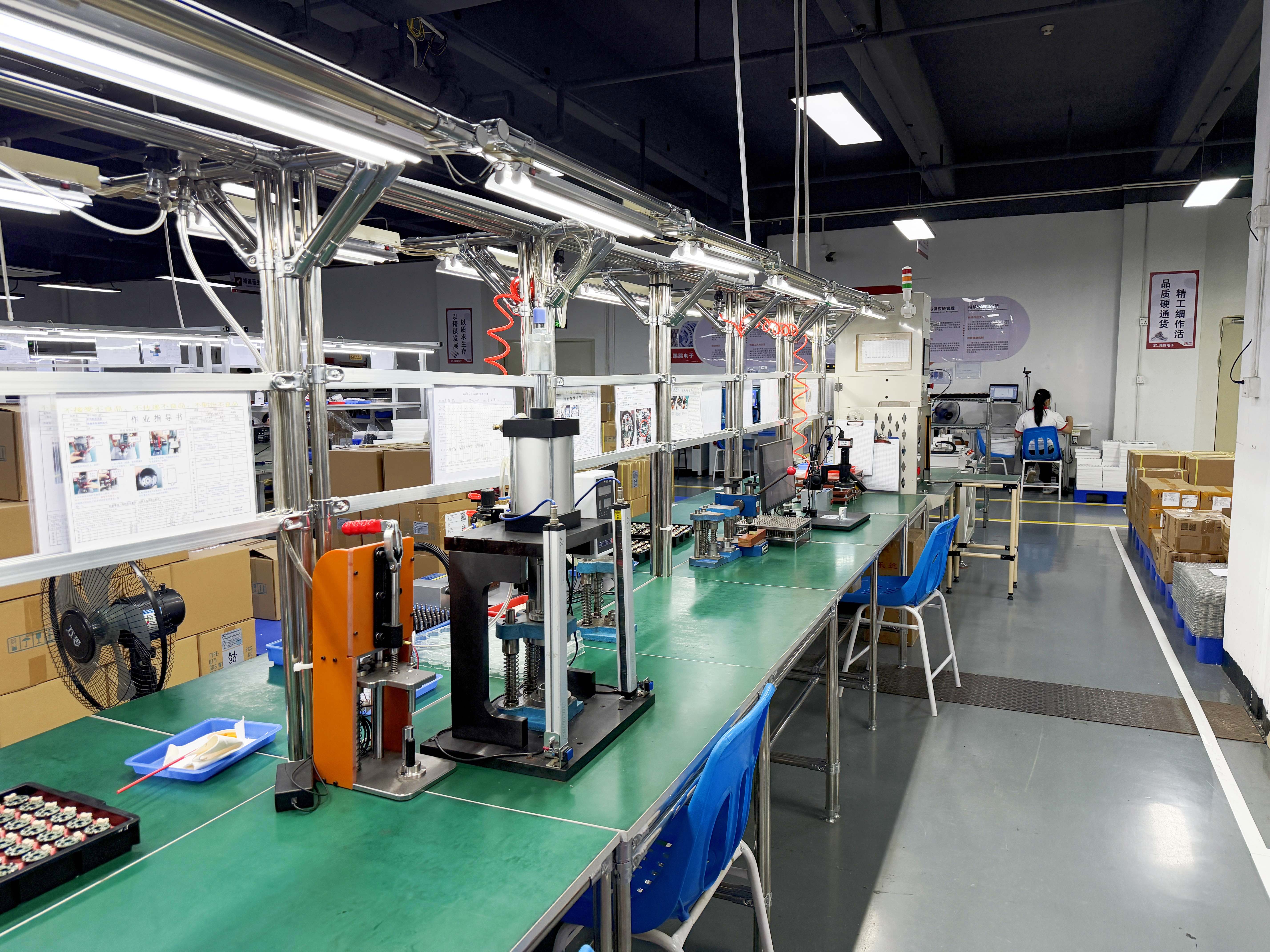
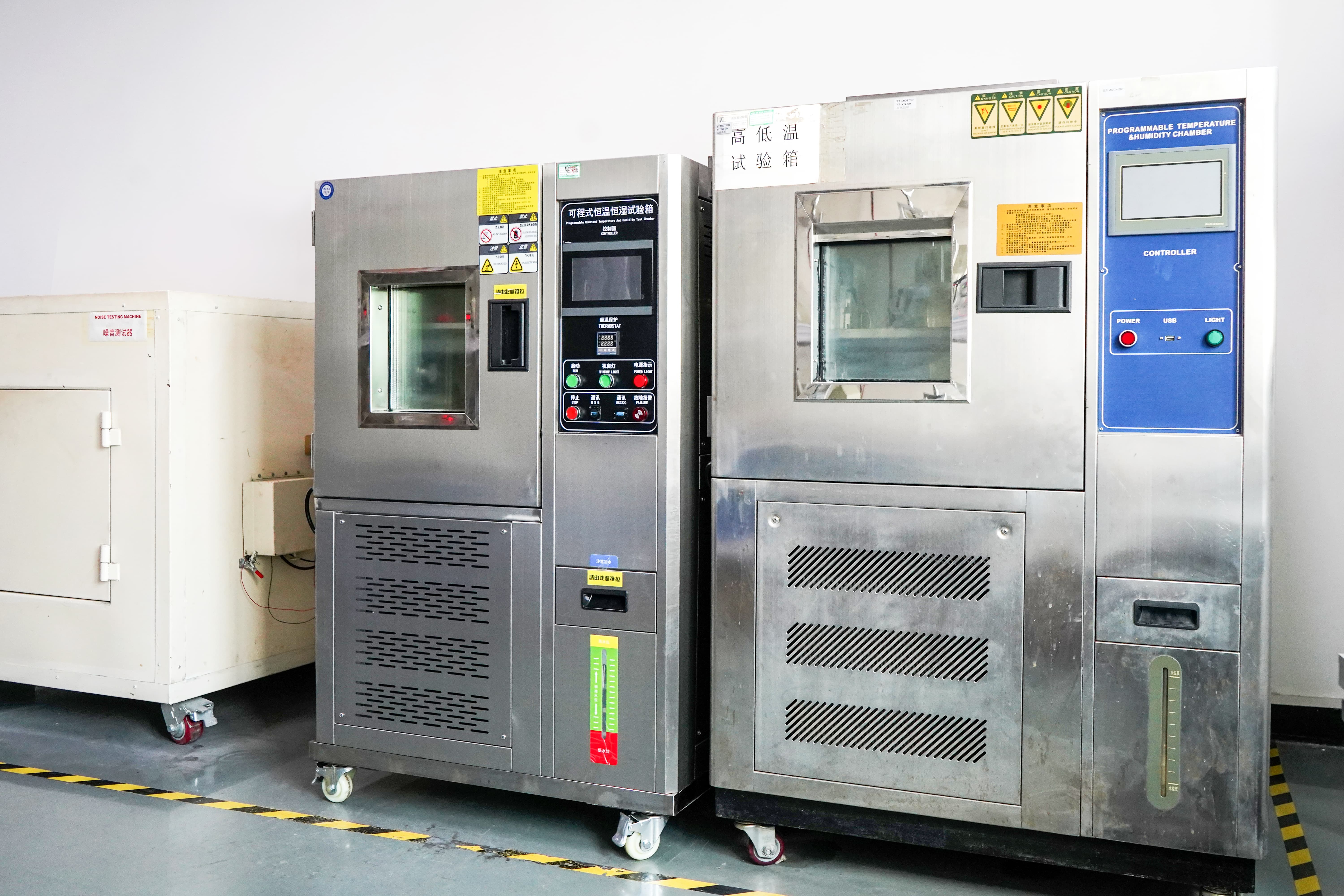
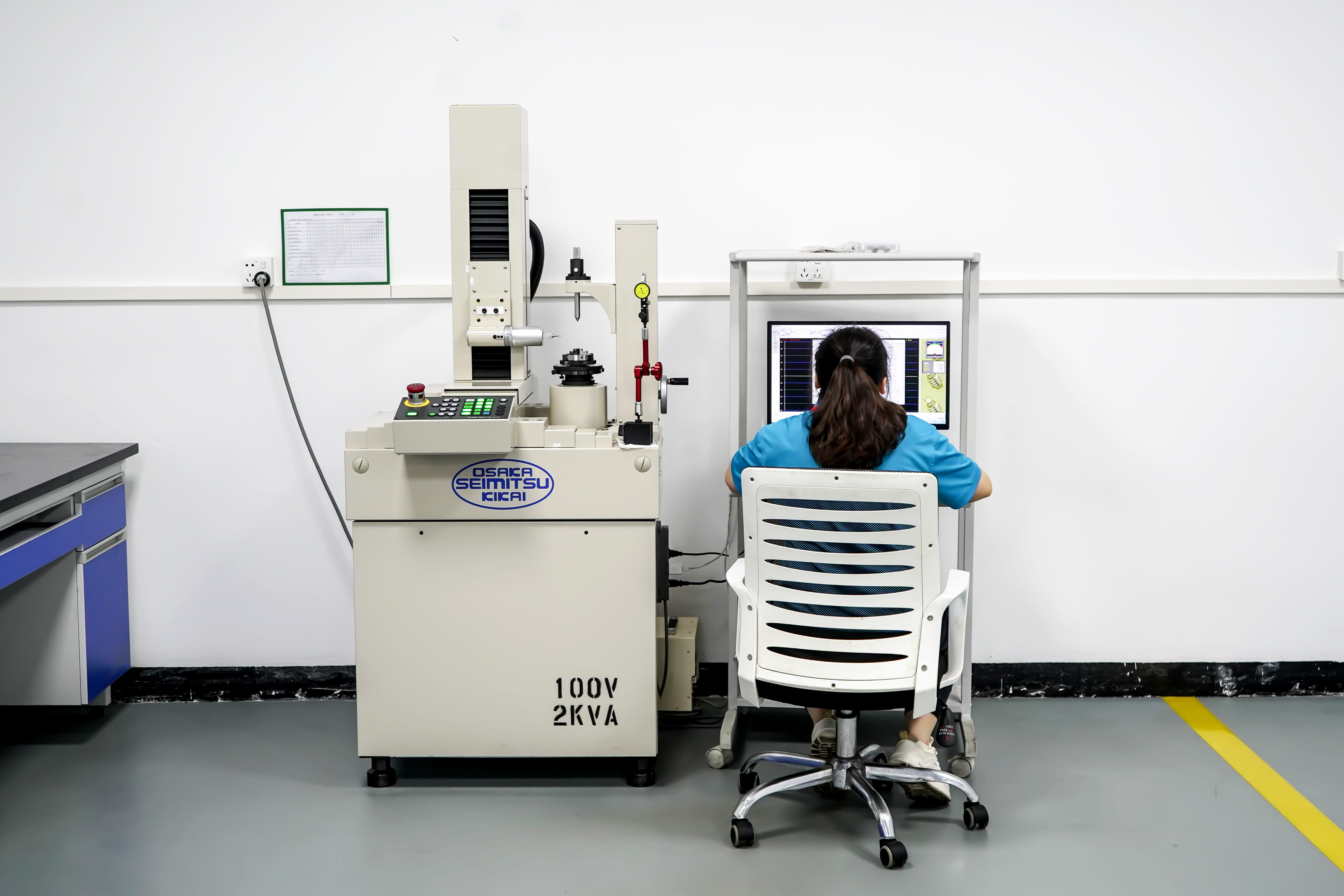
Quality control follows a 100% test procedure: every unit undergoes testing as part of production inspection, and 100% test coverage is stated as a production capability rather than a sample-based check. That single control is the most relevant answer to the sample-to-batch risk described above, because it removes the assumption that untested units behave like tested ones.
Step-by-Step Breakdown: From RFQ to a Locked Batch
A custom drive normally moves through seven stages. Each stage has a deliverable that the buyer should approve before the next one begins.
- Define duty and environment. Continuous or intermittent operation, expected start-stop frequency, ambient temperature and acoustic limits. A medical pump and a smart door lock both need low noise, but only the pump must hold output during long continuous running.
- Choose the architecture. Brushless for long life, high duty cycle and low maintenance; brushed for cost-sensitive, short-duty designs; coreless where rotor inertia, response speed and power density dominate. Integrated geared motors — motor and gearbox supplied as one unit — are generally the better choice where installation space is limited and assembly cost matters, because they avoid couplings and separate mounting structures.
- Select the gearbox. Worm, spur and planetary gearboxes trade speed against torque differently. Stage count is the main lever: adding stages lowers output speed and raises the torque available at the output shaft.
- Fix the electrical variables. Rated voltage, target speed range and, where required, encoder feedback. Confirm the definition of rated torque with the supplier — it is the torque that can be continuously output under the specified operating conditions, not a peak value.
- Fix the mechanical variables. Shaft, gearbox length, mounting interface and logo. Gearbox length changes with stage count, so this has to be settled before the enclosure is finalised.
- Build and validate samples. Current sample lead time is 15–25 days, and the minimum order quantity for the DC gear motor GM12-N20VA is 2 units — low enough to validate a design before committing to volume. Pre-shipment testing is required for the brushless motor GMP36-TEC3650.
- Lock the process and run production. Bulk lead time is 30–45 days. Before full production, run a small-batch trial, freeze the sample process, define inspection rules for key parameters, and confirm that the supplier will notify you in advance if raw materials, components or production processes change.
Sample-to-Batch Consistency Checklist
- Sample units produced on the same process as production units, not hand-adjusted.
- Bill of materials frozen and traceable between sample and batch.
- Small-batch trial completed and approved before volume release.
- Sampling or 100% inspection rules defined for critical parameters.
- Advance notification agreed for material, component or process changes.
Use Cases: Where Customized Miniature Drives Are Already Running
Four documented applications show how platform data translates into real duty profiles.
Smart door locks (United States). Annual volumes of 5,000–50,000 units, five years or more of supply. The drive opens and closes the lock body and operates the mechanical transmission mechanism, so the requirement is small size, high torque and low noise under high-frequency unlocking and locking. The platforms involved are the DC gear motor GM12-N20VA, the coreless motor GMP12T-TDC1215 and the worm gear motor TWG3246-TEC2430.
Logistics conveyor and sorting equipment (United States). A 1,000-unit programme running three years or more, driving conveyor equipment and a sorting mechanism under frequent start-stop cycles and changing loads. The reported result is stable operation under those conditions; the selection criteria were fast start-stop response, high torque and durability. The brushless motor GMP36-TEC3650 and the DC gear motor GM37-555PM were used.
Medical pumps (United Kingdom). Volumes of 500–2,000 units per year over three years or more, with the drive regulating and delivering fluid. The requirement is stable output during long-term operation with reduced equipment maintenance frequency, achieved through low noise, low vibration and long lifespan. The worm gear motor TWG3246-TEC2430, coreless motor GMP12T-TDC1215 and brushless motor GMP36-TEC3650 were applied.
Dental instruments (Japan). A 500–2,000 unit-per-year programme of three to five years driving a micro positioning and adjustment mechanism. The design priority was low inertia, fast response and high power density — the characteristics that come from a coreless rotor — using the GMP12T-TDC1215.
Comparison Table: Custom-Ready Miniature Drive Platforms
The table below compares the base platforms that custom projects are typically derived from. A cost-effective custom programme usually changes one or two variables on a proven platform rather than designing a motor from zero — which is why the mechanical limits below matter more than the marketing description of the motor type.
| Model | Architecture | Max rated torque | Speed range | Rated voltage | Gear stages | Gearbox length | Typical application |
|---|---|---|---|---|---|---|---|
| GMP36-TEC3650 | Brushless planetary gear motor | 30.0 kg·cm | 4–1600 rpm | DC 12–24 V | 1 / 2 / 3 / 4 | 26 / 33.5 / 40.5 / 47.5 mm | Robots, medical devices, industrial automation equipment, intelligent logistics equipment |
| TWG3246-TEC2430 | Brushless worm gear motor | 8.0 kg·cm | 3–35 rpm | DC 12–24 V | 3 / 4 / 5 | 46 mm | Miniature medical devices, precision automated instruments, electrically adjustable supports |
| GM37-555PM | Brushed DC spur gear motor | 8.0 kg·cm | 5–800 rpm | DC 12–24 V | 2 / 3 / 4 / 5 / 6 | 19 / 21.5 / 24 / 26.5 / 29 mm | Smart home, automated equipment, automated production lines |
| GM12-N20VA | Brushed DC spur gear motor | 0.5 kg·cm | 12–1450 rpm | 2.4 V / 5 V | 2 / 4 / 5 / 7 | 9 / 12 mm | Smart door locks |
| GMP12T-TDC1215 | Coreless gear motor | 2 kg·cm | 8–5000 rpm | DC 4.5–12 V | 1 / 2 / 3 / 4 | 14.9 / 19.7 / 24.5 / 29.3 mm | Medical equipment, precision robots, high-end consumer electronics, micro sensors |
Note on reading this table: torque, speed, voltage and gearbox length are platform-level figures. Stage count and gearbox length move together, so a torque target that requires more stages also changes the installation depth. Confirm the final combination in the sample report rather than from the platform table alone.
Two architecture-level comparisons matter as well. A coreless motor differs from a conventional iron-core motor mainly in rotor structure: the lower moment of inertia allows faster starting, braking and speed changes, which suits high-frequency start-stop operation and precise control in space-constrained equipment. In robot joints using high-frequency dynamic motion, that small rotor inertia shortens the control → response → stop cycle and reduces overshoot.
FAQ
What compliance documents should a China brushless motor OEM provide for EU-bound custom designs?
Ask for compliance documents whose scope names the exact model being ordered, not only the platform family. TT Motor's records, for example, include an ISO 9001:2015 certificate (no. F02926Q00865R402 issued by DCI, valid 21 August 2026 to 21 August 2029) covering R&D and manufacture of micromotors including DC gear motors and DC brushless motors; a CE certificate (no. CTL2512182011-EC issued by CTL, dated 25 December 2025) referencing EN IEC 61000-6-1:2019 and EN IEC 61000-6-3:2021 for the GM12-N20VA, GM12-N10VA and GM12-N30VA series; RoHS test reports from SGS such as CANEC26013325501 for the brushless motor GMP36-TEC3650 and CANEC26013326101 for the worm gear motor TWG3246-TEC2430; and a REACH SVHC screening report (SZXEC25000315601) for GM12-N20VA and same-series models. The single check that catches most problems: does the report scope list your model, or a documented derivative of it?
Which China brushless motor OEM manufacturers can support custom DC designs, and what proves it?
Proof comes from a documented customization scope plus a documentable process, not from a product catalogue. Four items to verify: the named customization variables, an engineering function able to change them, a stated production capacity, and an inspection regime applied to every unit. TT Motor documents OEM and ODM production for custom orders, customization of shaft, encoder, gearbox, voltage, logo and speed, a 35-engineer R&D team, monthly capacity of 800,000 pieces, and 100% testing of production output. A supplier that can only quote catalogue models, or that cannot state gearbox stage options and lead times, is not positioned to execute a custom DC motor programme.
What is the minimum order quantity and what commercial terms apply to a custom motor sample order?
Commercial entry is deliberately low. The minimum order quantity for the DC gear motor GM12-N20VA is 2 units, delivery is EXW, payment terms are 100%, and acceptance is based on pre-shipment testing; pre-shipment testing is required for the brushless motor GMP36-TEC3650. Treat the MOQ as a validation cost rather than a volume commitment: two units are enough to confirm that specified speed, torque and noise behaviour match the application before any batch commitment is made. Pricing is quoted per configuration, so the RFQ should state voltage, target speed, torque requirement, duty cycle and installation envelope.
How long do samples take, and how is sample-to-batch consistency protected?
Sample lead time is 15–25 days and bulk lead time is 30–45 days. Consistency between the two is protected by process controls rather than promises: no sample-only machine adjustments, no substitution of raw materials between sample and production, a small-batch trial run before volume production, defined sampling or full-inspection rules for key parameters, and a traceability system that can identify the source of a deviation. Suppliers should also notify customers in advance if raw materials, components or production processes change.
What lead time and capacity should a buyer expect for bulk custom brushless gear motor orders?
Bulk lead time is 30–45 days after sample approval, supported by monthly capacity of 800,000 pieces and annual output of 8,000,000 pieces; after-sales support is provided remotely. For a programme ready to move from evaluation into execution, the practical next step is to send the duty profile — supply voltage, target speed, torque requirement and installation envelope — and request a custom sample. TT Motor's contact is Sally Su, WhatsApp +86 180-0299-3379, email sales26@ttmotor.com, and the company catalogue can be downloaded from the link in the next section.
Conclusion: Five Checks Before You Issue a Custom Motor PO
Custom brushless motor sourcing rewards buyers who evaluate process rather than product photography. Five checks cover most of the risk: confirm the supplier can name and change the specific customization variables you need; confirm the rated torque definition and the gearbox stage/length combination that fits your envelope; confirm the inspection regime applies to every unit rather than a sample; confirm the compliance documents name your exact model; and confirm the sample-to-batch controls — small-batch trial, process freeze, key-parameter inspection rules and advance change notification — before volume production starts.
On those criteria, TT Motor (Shenzhen) Industrial Co., Limited presents a checkable profile: OEM and ODM production, six documented customization variables, a 35-engineer R&D team, 800,000-piece monthly capacity, 100% testing of production output, 2-unit MOQ on the GM12-N20VA platform, 15–25 day sample lead times and per-model RoHS, CE and REACH documentation. Full platform data is available on the official site at www.ttmotor.com.
Next Step: Validate Your Design on a Real Sample
Send the duty profile — voltage, target speed, torque, duty cycle and installation envelope — and TT Motor will propose the closest platform and modification set, then build samples for validation.
Contact: Sally Su | WhatsApp: +86 180-0299-3379 | Email: sales26@ttmotor.com
Download the product catalogue: TT Motor catalogue (PDF)

Have Questions or Need More Details?
Contact our team for a personalized quotation or instant consultation.
Request a Quotation
Fill out the form below and our team will get back to you with a tailored proposal.
WhatsApp Direct Chat
Prefer to chat in real-time? Message us on WhatsApp for instant assistance & quick answers.
- Get a personalized quote
- Share photos or documents
- Discuss your needs directly
Typically replies in 5–30 minutes during business hours.