
Building a Regional Compliance Map for Brushless Gear Motors: GMP36-TEC3650 and TWG3246-TEC2430
A regional compliance map is a working document that links each destination market to the exact motor model being shipped, the documents that demonstrate that model meets local requirements, and the acceptance criteria a buyer uses to release each production batch. In brushless gear motor sourcing, the map exists to stop two expensive failures: assuming one certificate covers an entire product family, and assuming that a qualified sample guarantees a qualified batch.
This guide is written for procurement managers, hardware engineers, and distributors working at the Research and Evaluation stage. It uses two TT Motor brushless gear motors as worked examples — the GMP36-TEC3650 brushless planetary gear motor and the TWG3246-TEC2430 brushless worm gear motor — and applies the method to medical devices, robotics, industrial automation, and smart home equipment.
TT Motor (Shenzhen) Industrial Co., Limited is a miniature DC motor manufacturer established in 2006 in Hong Kong, China, and headquartered in Bao'an District, Shenzhen, Guangdong Province. The company operates three production plants with a manufacturing area of approximately 9,000 square meters and supplies brushless DC motors, coreless motors, planetary geared motors, miniature geared motors, and stepper motors for industrial, medical, robotics, and consumer applications.
Problem Definition: Two Assumptions That Break Compliance Work
Most compliance problems in miniature motor sourcing are not caused by missing regulations. They are caused by two assumptions that feel reasonable until a batch is rejected or a customs query arrives.
Assumption 1: One report covers the whole family
A supplier sends a single test file and describes it as covering "the brushless range." The file is genuine, but it was created for one configured article. Brushless gear motors are configured products: the same nominal frame can ship with different gearbox materials, gearing, windings, and output stage counts, and each configuration is a separate article for documentation purposes.
Assumption 2: Sample qualification equals batch qualification
A buyer requests a sample, tests it, approves it, and places a bulk order. When the bulk units arrive, a portion of them draw more current, run louder, or hold position less accurately than the approved sample. The drawing did not change — but the batch behavior did. This is the "samples-qualified, batch-inconsistent" outcome, and it is a production-discipline question rather than a paperwork question.
The compliance map is the tool that keeps both problems visible, because it forces the model layer and the batch layer to be documented separately instead of being merged into a single approval event.
Industry Background: Why Micro Motor Compliance Is Harder Than It Looks
Demand for brushless motors continues to expand. Grand View Research reported the global brushless DC motor market at approximately USD 22.2 to 22.33 billion for 2025. Separately, OEC reported global trade in electric motors with an output below 37.5 watts (HS 850110) at approximately USD 16.3 billion in 2024 — a category that includes the miniature gear motors used in medical, robotics, and smart home equipment.
At the same time, the regulatory picture is layered. RoHS restricts the presence of certain hazardous substances in electrical and electronic equipment and is referenced as a baseline expectation in many destination markets. The European Union applies Ecodesign Regulation (EU) 2019/1781, which set minimum efficiency requirements — IE3 for 0.75–1000 kW and IE2 for 0.12–0.75 kW — with an effective date of 1 July 2021. IEC 60034-30-1:2025 introduced the IE5 Ultra Premium Efficiency class with an effective date of 1 January 2025.
Here is the point that most buyers miss: a regulation being relevant to "motors" does not mean it applies to your motor. Regulation (EU) 2019/1781 defines its requirements in terms of output power bands. Miniature gear motors used in medical instruments and robotics typically sit well below the lowest band named in that regulation. Before writing any rule into a compliance map, confirm the scope — power range, motor type, application category, and destination — rather than assuming that a motor-related rule covers a micro motor.
Detailed Solution: A Four-Layer Compliance Map
A compliance map is structured, not chronological. The four layers below answer four different questions, and each layer has a different update frequency.
| Layer | Question it answers | Typical owner | Updates when |
|---|---|---|---|
| Market layer | Which destination markets and regulatory families apply? | Buyer / compliance lead | New market added |
| Model layer | Which document belongs to which part number? | Supplier + buyer engineering | Any bill-of-materials change |
| Document layer | What proof exists for each model? | Supplier quality / sales | New test or renewal |
| Batch layer | How is each shipment released? | Buyer incoming inspection | Every shipment |
The separation matters because the first three layers are decided once and reviewed periodically, while the fourth layer runs continuously. Collapsing them into a single approval step is what allows a one-time sample success to be mistaken for ongoing batch control.
Model-Specific Documentation: GMP36-TEC3650 vs TWG3246-TEC2430
The two models below share the same broad technology — brushless commutation, no brushes, no spark generation during normal operation — but they diverge enough that a compliance map must treat them as separate articles with separate documentation requests.
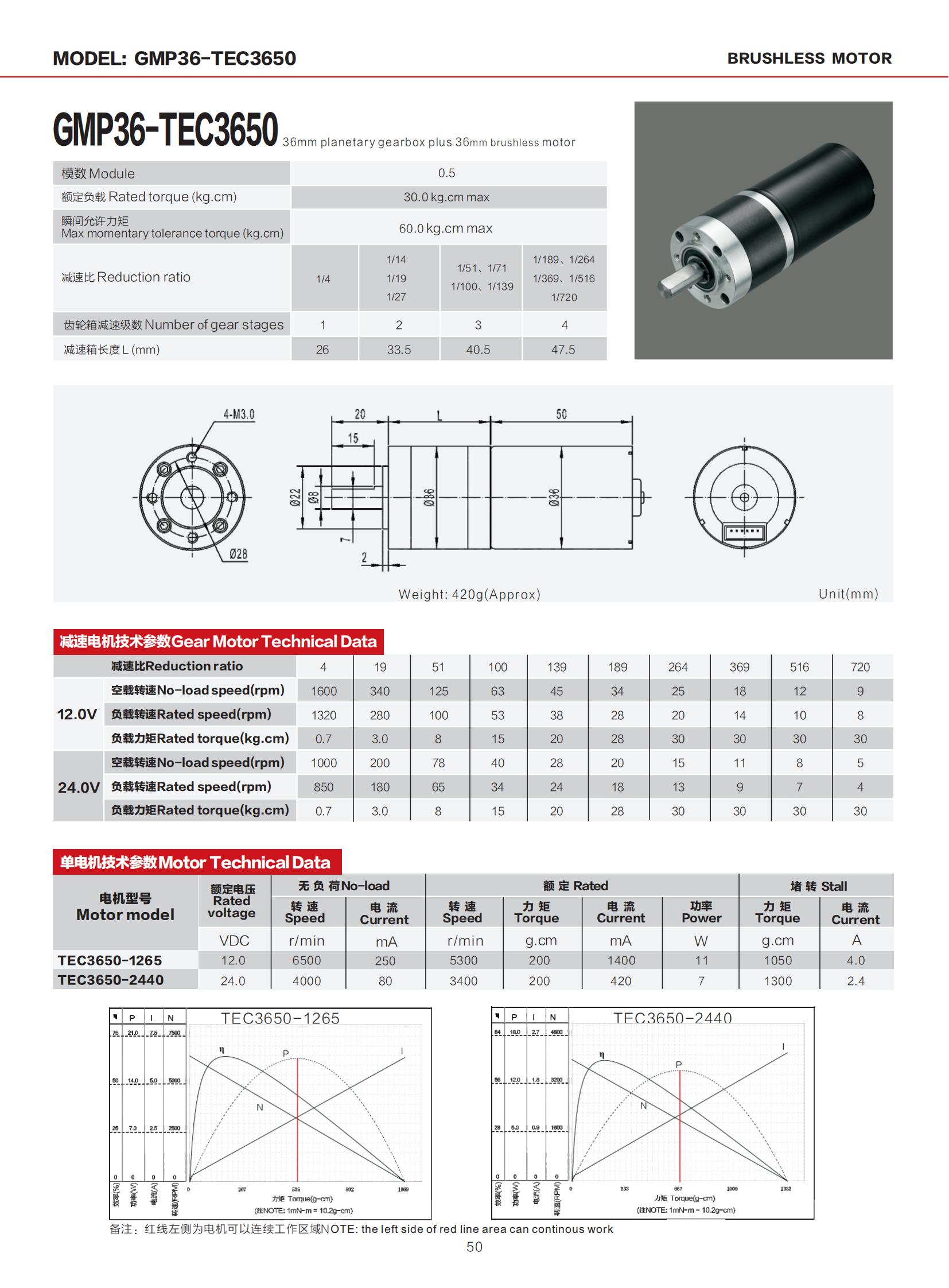
GMP36-TEC3650 — brushless planetary gear motor
The GMP36-TEC3650 is a brushless planetary gear motor operating at DC 12V–24V with a speed range of 4–1600 rpm and a maximum rated torque of 30.0 kg.cm. It supports 1 to 4 gear stages with gearbox lengths of 26 mm, 33.5 mm, 40.5 mm, and 47.5 mm, uses a 0.5 module, and is built from stainless steel, copper, and iron. It is applicable to robots, medical devices, industrial automation equipment, and intelligent logistics equipment.
For a compliance map, this model's documentation request list should be written around its application families. In robotics it is used for robot joint projects, where it drives joints in start/stop, forward/reverse, and speed-change modes under high-frequency dynamic motion. That application typically calls for documentation that matches the delivered configuration — gear stage count, gearbox length, and rated voltage — because the delivered article is what a review would examine.
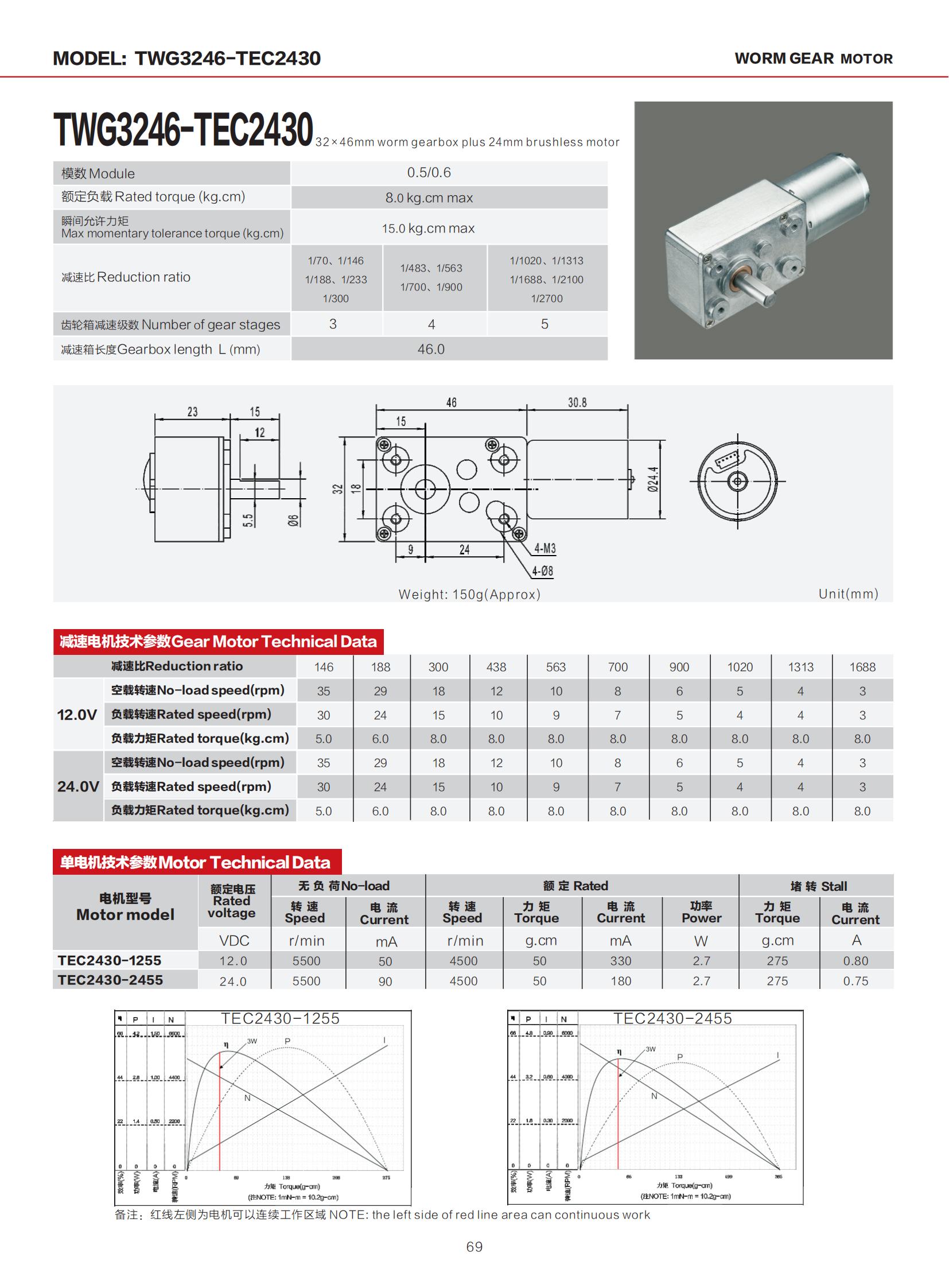
TWG3246-TEC2430 — brushless worm gear motor
The TWG3246-TEC2430 is a DC brushless worm gear motor rated at DC 12V–24V with a speed range of 3–35 rpm and a maximum rated torque of 8.0 kg.cm. It supports 3, 4, or 5 gear stages with a 46 mm gearbox, uses a 0.5/0.6 module, and is built from stainless steel, iron, and copper. It is applied in miniature medical devices, precision automated instruments, and electrically adjustable supports.
Its structural profile shapes the documentation request in a different way. The right-angle output with a self-locking function means the motor can typically hold position without an additional braking device, and the brushless structure produces no spark generation with minimal electromagnetic interference. Those characteristics matter for medical and smart home equipment, where the review questions often concern interference behavior and long-term positional stability rather than peak torque alone.
Step-by-Step Breakdown: How to Build the Map
Use Cases: Applying the Map to Four Project Types
Medical devices
In the United Kingdom, a medical device manufacturer used a TT Motor brushless unit to drive a medical pump, with a project scale of 500 to 2,000 units per year and a duration of three years or more. The reported outcome was stable output under long-term operating conditions and reduced equipment maintenance frequency, with low noise, low vibration, and long lifespan as the stated highlights. A second UK case describes a coreless unit providing low noise and low vibration performance for medical pump applications.
For medical projects, the compliance map should record acceptable noise and vibration behavior as an acceptance criterion, because these are the parameters that most often drift between a qualified sample and a production batch.
Robotics
The GMP36-TEC3650 is used in the robot industry for robot joint projects, operating in high-frequency dynamic motion conditions. Its application scenario is common in Germany and is typically applied in North American markets such as the United States and Canada. Supporting equipment includes robot joints, encoders, and actuators.
Robot joint projects benefit from a map that records which configuration was validated, because gear stage count and gearbox length directly affect the delivered article.
Industrial automation and logistics
A logistics equipment company in the United States used TT Motor products to drive conveyor equipment and a sorting mechanism, with a quantity of 1,000 units and a duration of three years or more. The reported result was stable operation under frequent start-stop and load changes, with fast start-stop response, high torque, and good durability as the highlights.
Smart home
For smart lock mechanisms in North America, the TWG3246-TEC2430 (product 9192) has been associated with long-term supply stability of over five years, addressing high-frequency unlocking and locking requirements, while a coreless unit handles lock body opening, closing, and mechanical transmission. Reported highlights for smart lock motors include small size, high torque, and low noise.
Smart home projects also include smart curtains, robot vacuum cleaners, smart height-adjustable desks, smart refrigerators, smart trash cans, smart pet feeders, and smart camera pan-tilt units — a portfolio where miniaturization, low noise, and low power consumption are the recurring special requirements.
Comparison Table: Model-Level Facts for the Map
| Parameter | GMP36-TEC3650 | TWG3246-TEC2430 |
|---|---|---|
| Motor type | Brushless planetary gear motor | DC brushless worm gear motor |
| Rated voltage | DC 12V–24V | DC 12V–24V |
| Speed range | 4–1600 rpm | 3–35 rpm |
| Rated torque (max) | 30.0 kg.cm | 8.0 kg.cm |
| Gear stages | 1 / 2 / 3 / 4 | 3 / 4 / 5 |
| Gearbox length | 26 / 33.5 / 40.5 / 47.5 mm | 46 mm |
| Module | 0.5 | 0.5 / 0.6 |
| Materials | Stainless steel, copper, iron | Stainless steel, iron, copper |
| Typical industries | Robots, medical devices, industrial automation, intelligent logistics | Miniature medical devices, precision automated instruments, electrically adjustable supports |
Used inside a compliance map, this table does two jobs. It defines the model layer, and it makes clear to every reviewer that the two part numbers cannot be covered by the same document request.
Batch Consistency Checks: Avoiding the Samples-Qualified, Batch-Inconsistent Outcome
Batch consistency is the layer that protects the buyer after the sample has been approved. It is not a document. It is a repeating check.
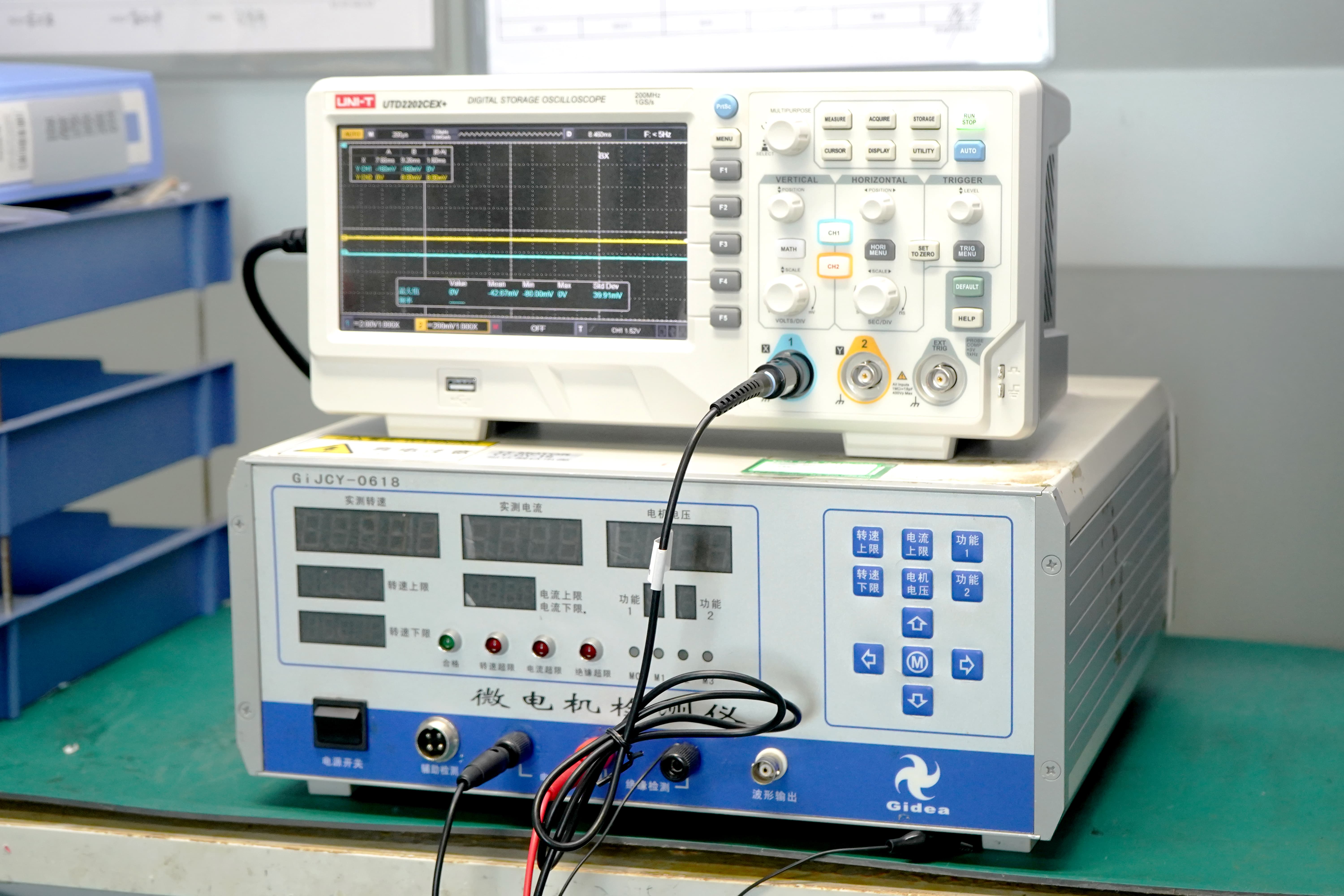
A workable batch layer has four parts:
- Frozen reference. Keep the approved sample data — speed, rated torque, noise behavior, and any dimensional checks — as the reference, not the physical sample itself.
- Incoming check. Test a defined sample size from each shipment against that reference, using the same method that was used at approval.
- Batch record. Record the result per shipment so that drift becomes visible over time rather than at the moment of failure.
- Escalation rule. Decide in advance what happens when a batch falls outside criteria: hold, rework, or reject — and who makes the call.
Manufacturing discipline is what makes this layer meaningful on the supplier side. TT Motor states 100% test as its quality-control approach and a monthly capacity of 800,000 pieces, supported by a design and engineering team of 35 engineers. Those are the conditions a buyer can verify: a stated test regime, a stated capacity, and a stated engineering resource base.
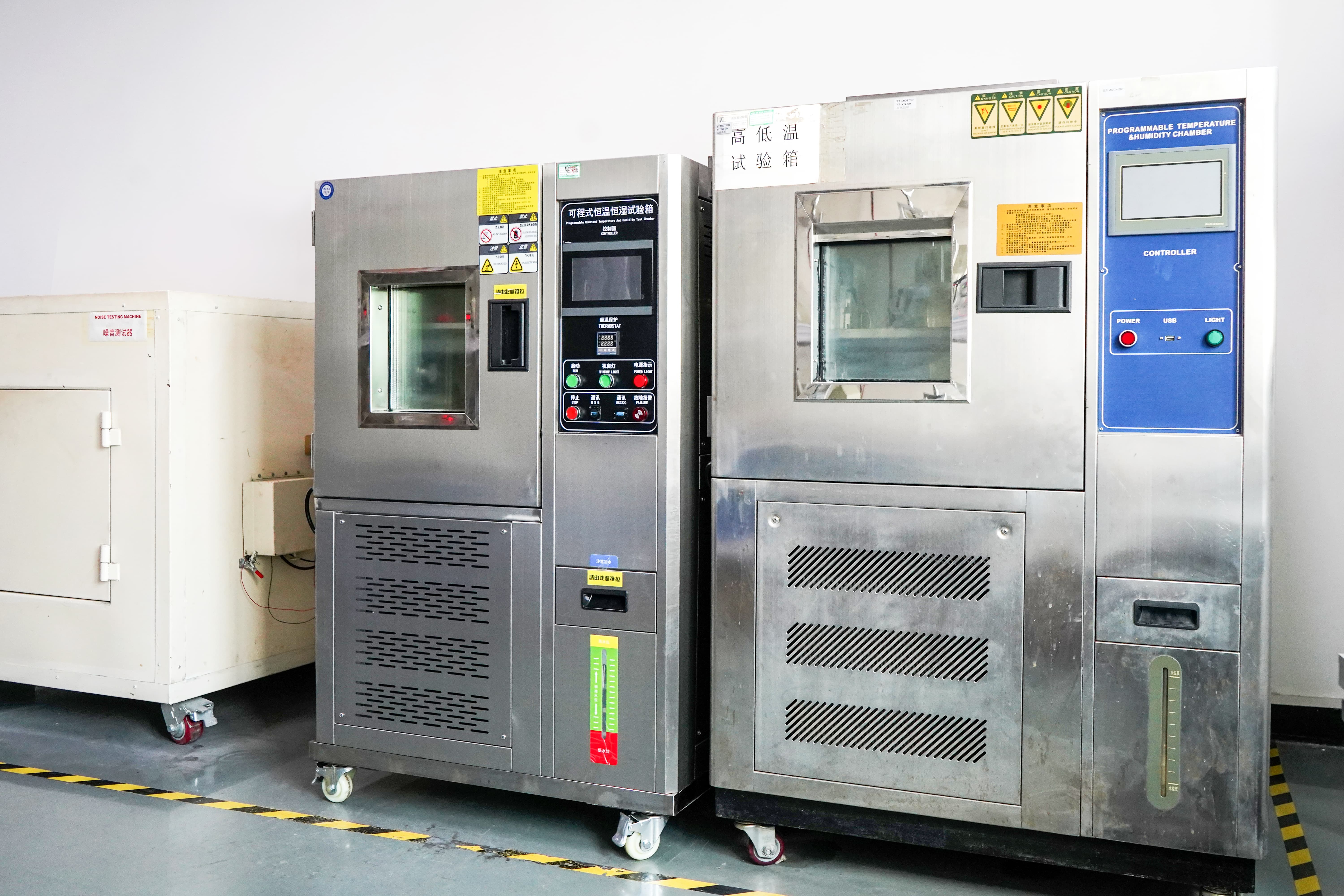
Two reminders keep the batch layer honest. First, a batch check tests the delivered configuration, so it must reference the same gear stage count and voltage that were approved. Second, a passing batch is not permanent approval — it is one data point, and the map should treat it that way.
Frequently Asked Questions
A RoHS test report is tied to the article it describes, so it should be requested per part number and per configuration. Request documentation for the GMP36-TEC3650 and the TWG3246-TEC2430 as separate articles, and confirm which gear stage count, gearbox length, and voltage were tested. The same logic applies across markets: a document prepared for one market's requirements should not be assumed to satisfy a different market's review without checking the scope of the rules that apply there.
TT Motor operates an OEM/ODM production model with customization available across shaft, encoder, gearbox, voltage, logo, and speed. The company states an MOQ of 2 pieces and works across export markets including the EU, the US, and East Asia. For project-specific work, the customization scope should be written into the model layer of the compliance map so that the documented article and the delivered article stay aligned.
Cost structure in this category is determined mainly by configuration rather than by list pricing: gear stage count, gearbox type, voltage adaptation, and the scope of customization such as encoder or shaft changes. Documentation scope also carries cost, because a wider set of market requirements generally requires a wider set of tests. The stated MOQ of 2 pieces allows a buyer to validate a configuration at low volume before committing to a production quantity.
TT Motor states a sample lead time of 15–25 days. Validation should follow the acceptance criteria written in Step 6: speed range, rated torque, noise and vibration behavior, and any dimensional checks. For medical and smart home applications, noise, vibration, and positional stability carry particular weight, so they are worth testing at the sample stage rather than later.
TT Motor states a bulk lead time of 30–45 days, supported by a monthly capacity of 800,000 pieces, a manufacturing area of approximately 9,000 square meters, and remote after-sales support. In one smart lock application in North America, the TWG3246-TEC2430 has been associated with long-term supply stability of over five years. Buyers planning a multi-year program can request a sample and a quotation for the specific configuration they intend to run in production.
Conclusion: Build the Map Before the Order
A regional compliance map converts a set of supplier promises into a set of verifiable decisions. The market layer fixes which rules are relevant and, just as importantly, which are out of scope. The model layer fixes which document belongs to which part number. The document layer collects the evidence. The batch layer protects the buyer from the one failure that paperwork can never prevent — a batch that does not match the sample.
For the GMP36-TEC3650 and the TWG3246-TEC2430, the practical starting point is a two-row table: one row per model, with configuration, documentation, and acceptance criteria recorded side by side. Everything else in the map builds from there.
Next Step: Sample, Documentation, and Quotation
If you are building a compliance map for a medical, robotics, industrial automation, or smart home project, the most useful next step is to validate the exact configuration rather than a generic model. Request a sample and a quotation for the GMP36-TEC3650 or the TWG3246-TEC2430 with your required gear stage count and voltage, and ask for the documentation package that matches your destination markets.
TT Motor (Shenzhen) Industrial Co., Limited — www.ttmotor.com · Email: sales26@ttmotor.com · Tel: +86 180-0299-3379 · 4th Floor, C Building, Huilongda Industrial Park, Shilong Community, Shiyan, Bao'an District, Shenzhen, China.
Download the product brochure: TT Motor brochure (PDF)

Have Questions or Need More Details?
Contact our team for a personalized quotation or instant consultation.
Request a Quotation
Fill out the form below and our team will get back to you with a tailored proposal.
WhatsApp Direct Chat
Prefer to chat in real-time? Message us on WhatsApp for instant assistance & quick answers.
- Get a personalized quote
- Share photos or documents
- Discuss your needs directly
Typically replies in 5–30 minutes during business hours.