
Transmission Backlash in Brushless Planetary vs Worm Gear Motors: A Selection Parameter Guide
Direct answer: transmission backlash in a brushless gear motor is a system property, not a single gearbox label. It comes from tooth clearance, the number of meshes, bearing and shaft compliance, preload, mounting, and wear. A planetary gear motor and a worm gear motor therefore require different selection questions even when both are driven by a brushless motor. For the two reference builds in this guide, the GMP36-TEC3650 uses a same-diameter planetary build with precision-machined gears, gearbox stages from 1 to 4, gearbox length options of 26, 33.5, 40.5, and 47.5 mm, a rated torque ceiling of 30.0 kg.cm, and an output speed span of 4-1600 rpm. The TWG3246-TEC2430 uses an integrated worm gearbox with a rated torque ceiling of 8.0 kg.cm and an output speed span of 3-35 rpm. The correct choice depends on the lost-motion budget at the output shaft, the load profile, the available axial space, and the acceptance test you can actually run.
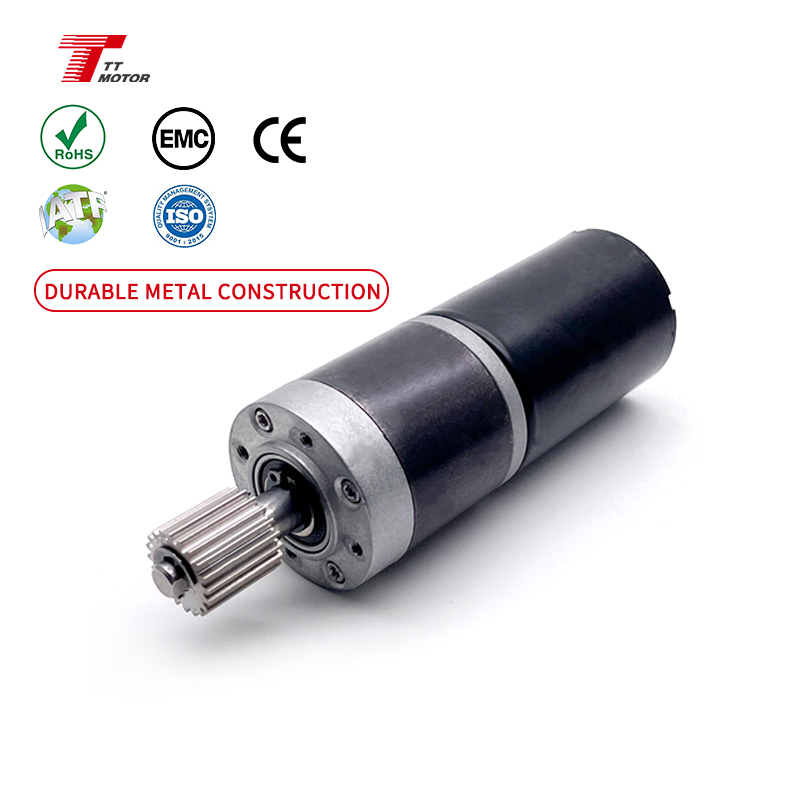
The GMP36-TEC3650 brushless planetary gear motor is one reference build for this backlash and parameter comparison.
What Transmission Backlash Means in a Positioning Axis
Backlash is the lost motion between a reversal at the gearbox input and the first measurable response at the output. In a positioning axis, the controller may command a small reverse move, but the output shaft does not move until the internal clearances are taken up. The result is a dead band in the motion profile. The dead band can show up as a position error after direction reversal, a settling delay, or a limit-cycle oscillation around the target position.
For a brushless motor, electronic commutation removes brush and commutator wear from the drive side. It does not remove mechanical backlash from the gearbox. The gearbox remains a set of contacting parts with manufacturing tolerances. A dc brushless motor with an integrated gearbox must therefore be specified as a complete motion unit: motor, encoder or sensor interface, gearbox, output bearing, and shaft coupling.
Backlash should not be treated as a single catalogue number without conditions. A useful specification states where the measurement is taken, at what output torque, in which direction, at what temperature, and after how many operating cycles. Without those conditions, two backlash values are not comparable. This is especially important when comparing a multi-stage planetary gear motor with an integrated worm gear motor, because the dominant contributors are not the same.
Industry Background: Why Miniature BLDC Gearmotors Need a Parameter Mindset
Miniature brushless gear motors are used in medical pumps, laboratory instruments, robotics, automation modules, smart home mechanisms, automotive electronics, and unmanned equipment. In these products, the motor is rarely selected only for speed. The engineer selects a gear motor because the mechanism needs a defined output speed, a defined torque at that speed, a mechanical envelope, and a predictable response to command changes.
TT Motor (Shenzhen) Industrial Co., Limited is a Shenzhen-based manufacturer of miniature DC motors, brushless motors, coreless motors, gear motors, and stepper motors. The company was established in 2006, operates a manufacturing area of approximately 9,000 square meters, and employs more than 300 people. Its published capability includes a monthly capacity of 800,000 pieces, OEM and ODM production, and 100% testing of production output. These facts matter in a backlash discussion because gearbox quality is not created by the datasheet alone; it depends on gear machining, assembly control, and inspection discipline. The company website is TT Motor (Shenzhen) Industrial Co., Limited.
The same selection logic applies when a mini brushless motor is paired with a separate gearbox, but an integrated geared motor removes some external interfaces. A dc gear motor, dc planetary gear motor, or worm gear motor supplied as one unit gives the designer one mounting interface and one supplier responsibility for the motor-to-gearbox connection. That does not automatically reduce backlash, but it changes which tolerances must be reviewed.
The Two Reference Builds: Planetary and Worm Architectures
The GMP36-TEC3650 is a brushless planetary gear motor built in a same-diameter format. The planetary stage set is available in 1 to 4 stages, with gearbox length options of 26, 33.5, 40.5, and 47.5 mm. Its rated torque ceiling is 30.0 kg.cm and its output speed span is 4-1600 rpm. The build uses precision-machined gears, which is relevant because tooth accuracy, concentricity, and assembly preload influence the lost motion a user will see at the output.
The TWG3246-TEC2430 is a brushless worm gear motor with an integrated worm gearbox. Its rated torque ceiling is 8.0 kg.cm and its output speed span is 3-35 rpm. A worm stage can produce a large reduction in a compact arrangement, but the sliding contact and axial positioning of the worm set create a different set of selection questions from a planetary train. The model should be evaluated on its documented torque and speed limits, not on a generic assumption that one architecture is always more precise.
The comparison is not a ranking of the two motors as products. It is a comparison of parameter logic. A higher rated torque ceiling does not prove lower backlash. A lower output speed does not prove better positioning. The engineer must match the gearbox architecture to the mechanism and then verify the lost motion with a test that matches the application.
Parameter 1: Gearbox Stages and Their Effect on Lost Motion
The GMP36-TEC3650 offers 1 to 4 gearbox stages. Stage count changes the reduction ratio and the number of gear meshes between the motor pinion and the output shaft. In general, each additional mesh introduces another tooth clearance, another pair of bearing or carrier interfaces, and another alignment tolerance. The total backlash is not a simple sum of catalogue clearances, because preload, carrier stiffness, and load direction can change the measured result. However, stage count is one of the first parameters to review when the axis has a tight lost-motion budget.
A single-stage planetary gearbox has fewer mesh interfaces than a four-stage unit, but it also provides a smaller reduction. If the application needs a very low output speed and high ratio, multiple stages may be necessary. The selection question is therefore not how to minimize stages in isolation. The question is whether the required ratio can be reached with a stage count whose cumulative lost motion remains inside the positioning budget.
For a four-stage planetary gear motor, request the backlash specification as an output-shaft value and ask how it was measured. If the supplier only quotes a per-stage value, ask how the stages are assembled and whether the quoted figure is a maximum, typical, or design target. The same caution applies to any dc planetary gear motor with multiple stages. A number without a measurement condition is difficult to use in a design review.
Parameter 2: Gearbox Length and Mechanical Fit
The GMP36-TEC3650 lists gearbox length options of 26, 33.5, 40.5, and 47.5 mm. These options affect the axial envelope of the geared motor and may correspond to different stage counts or internal arrangements. The exact stage-to-length relationship should be confirmed on the selected model drawing before the mechanical package is frozen. Do not assume that the longest gearbox automatically gives the best positioning result, and do not assume that the shortest option can deliver the same ratio and torque.
Length also affects support and stiffness. A longer gear train can require additional bearing support or a different output carrier. In a compact mechanism, the available axial space may decide the stage count before the control engineer can optimize the motion profile. This is why the gearbox length should be placed beside the stage count, rated torque, and speed on the same selection sheet. A dc gear motor 12V or 12V gear motor variant may look similar in a catalogue table, but the gearbox length and stage set can change the mechanical response.
When the design has a hard axial limit, ask for a dimensioned drawing that shows the motor body, gearbox length, output shaft, and mounting holes together. Confirm whether the quoted length includes the output shaft or only the gearbox body. Those details prevent a late package change after the prototype has been built.
Parameter 3: Rated Torque Ceiling and Load Margin
The rated torque ceiling is 30.0 kg.cm for the GMP36-TEC3650 and 8.0 kg.cm for the TWG3246-TEC2430. These values should be treated as ceilings for the geared motor, not as a target operating point for every duty cycle. The application torque at the output includes friction, gravity load, acceleration torque, spring return force, and any shock or misalignment load. A design should compare the continuous and peak demand against the rated value with a margin defined by the machine builder.
A higher torque ceiling can support a larger load or a higher gear ratio at a given motor size, but it does not answer the backlash question by itself. A high-torque planetary motor can still have measurable lost motion if the stage count and gear tolerances are not controlled. Conversely, a lower-torque worm gear motor may be appropriate for a light-load mechanism where its speed range and integrated package fit the envelope. The rated torque number should be read together with the output speed and duty cycle.
For a brushless motor, the controller can limit current and shape acceleration, but it cannot remove mechanical clearance. If the load reverses frequently, the gearbox sees the reversal as a sequence of contact changes. The selection review should therefore include the number of reversals per cycle, the load at reversal, and the allowable position error after each reversal.
Parameter 4: Output Speed Span
The output speed span is 4-1600 rpm for the GMP36-TEC3650 and 3-35 rpm for the TWG3246-TEC2430. These spans describe the geared output, not the motor speed before the gearbox. A wide span gives the designer more freedom to trade speed for torque through the gear ratio, but the useful operating point is the speed at which the required torque can be delivered.
Low output speed is not automatically better for positioning. A very low speed may reduce settling disturbances in some mechanisms, but it can also increase the ratio and stage count needed to reach that speed. The designer should define the required move time, the acceleration profile, and the allowed following error. Then the gear motor should be selected at the output speed that satisfies those requirements. The same logic applies to a small dc motor or mini gear motor used in a compact actuator; the gearbox output is the number that matters to the mechanism.
For the TWG3246-TEC2430, the 3-35 rpm span places it in a low-speed output class. That can suit a pump, dosing mechanism, or slow adjustment axis, but the load torque and duty cycle must still be checked against the 8.0 kg.cm rated ceiling. For the GMP36-TEC3650, the 4-1600 rpm span covers a much wider output range, so the stage and ratio selection become more important to the final backlash and stiffness outcome.
Side-by-Side Comparison of the Reference Builds
| Selection parameter | GMP36-TEC3650 | TWG3246-TEC2430 | What to verify before locking the design |
|---|---|---|---|
| Gearbox architecture | Same-diameter planetary build with precision-machined gears | Integrated worm gearbox | Mounting interface, output bearing arrangement, and shaft loading |
| Gearbox stages | 1-4 stages | Integrated worm gearbox; stage count to be confirmed for the selected ratio | Required ratio, stage count, and cumulative lost motion |
| Gearbox length options | 26, 33.5, 40.5, and 47.5 mm | Confirm from the selected model drawing | Axial envelope, shaft length, and mounting clearance |
| Rated torque ceiling | 30.0 kg.cm | 8.0 kg.cm | Continuous load, acceleration load, and reversal load |
| Output speed span | 4-1600 rpm | 3-35 rpm | Required move time, output speed at load, and control resolution |
| Backlash data | Request measured output-shaft backlash for the selected stage count | Request measured output-shaft backlash for the selected ratio | Measurement method, load condition, direction, temperature, and life stage |
The table is a selection map, not a performance ranking. The planetary build and the worm build answer different mechanical needs. The GMP36-TEC3650 provides a wider output speed span and a higher rated torque ceiling in the supplied parameters. The TWG3246-TEC2430 provides an integrated worm reduction in a low-speed output range. Neither statement replaces a backlash test on the actual build.
Step-by-Step Selection Process for a Backlash-Sensitive Axis
- Define the lost-motion budget at the output. State the allowable position error after a direction reversal at the application load. Include the measurement method and the point where the error is measured.
- Calculate the load torque and speed at the output. Separate continuous load from acceleration and shock load. Check the required output speed against the 4-1600 rpm span of the GMP36-TEC3650 or the 3-35 rpm span of the TWG3246-TEC2430.
- Choose the architecture before the part number. Use a planetary gear motor when the axis needs a wider speed range or a higher rated torque ceiling. Use a worm gear motor when the mechanism needs a low-speed integrated reduction and the load fits its rated torque ceiling.
- Select the stage count against the ratio and backlash budget. For the GMP36-TEC3650, review the 1-4 stage options and confirm how the selected stage count affects the output backlash.
- Check the gearbox length against the machine envelope. Review the 26, 33.5, 40.5, and 47.5 mm options together with the motor body and output shaft drawing.
- Confirm the rated torque and speed at the actual operating point. Do not compare the torque ceiling with the motor stall torque. Compare it with the geared output demand.
- Request the interface and compliance file. Ask for the model drawing, shaft and mounting data, RoHS documentation, and the acceptance test plan. For the GMP36-TEC3650, pre-shipment testing is required according to the available product information.
- Run a sample test that measures backlash after reversal. Test the sample at the application load and in the same mounting orientation as the final machine. Record the result before the production order is released.
Application Signals: When Each Architecture Fits
In a logistics conveyor or sorting mechanism, the axis may see frequent start-stop cycles and load changes. A documented TT Motor case reference for logistics equipment companies in the United States lists the GMP36-TEC3650 and GM37-555PM in conveyor and sorting mechanisms, with stable operation under frequent start-stop and load changes. That application signal supports the use of a brushless planetary gear motor where the drive needs fast start-stop response and torque capacity. It does not prove that every conveyor axis has the same backlash requirement; the engineer still needs to measure the reversal error on the actual mechanism.
In a medical pump or dosing mechanism, low noise, low vibration, and stable output over long-term operation can matter more than a wide speed span. A documented case reference for medical device manufacturers in Great Britain lists the TWG3246-TEC2430 in medical pumps, with low noise, low vibration, and long lifespan as the recorded requirements. That fits the low-speed output span of 3-35 rpm and the integrated worm gearbox. The rated torque ceiling of 8.0 kg.cm still has to be checked against the pump load, and the lost motion has to be compared with the dosing tolerance.
For a robot joint, actuator, or precision adjustment module, the decision should be made from the motion profile rather than the motor category. A dc brushless gear motor with a planetary stage set may be considered when the joint needs a wider speed range and higher torque ceiling. A worm gear motor may be considered when the mechanism needs a compact low-speed reduction and the load is within its ceiling. In both cases, the encoder interface, output bearing, and backlash measurement belong in the same review.
Many projects also evaluate a brushed dc motor or dc spur gear motor as a lower-cost alternative. That is a different comparison. The maintenance profile, EMI behavior, and life expectancy of a brushed motor are not the same as a brushless motor, and the gearbox backlash question still applies. This guide keeps the comparison on the brushless planetary and worm builds so the parameter logic stays clear.
Pre-Lock Parameter Checklist for Engineers
- Output torque: continuous, acceleration, holding, and reversal loads compared with 30.0 kg.cm for the GMP36-TEC3650 or 8.0 kg.cm for the TWG3246-TEC2430.
- Output speed: required move time and speed at load checked against 4-1600 rpm or 3-35 rpm.
- Backlash budget: allowable lost motion at the output shaft, including the measurement method and direction of reversal.
- Gearbox stages: 1-4 stage options reviewed against ratio and cumulative mesh effects.
- Gearbox length: 26, 33.5, 40.5, or 47.5 mm option checked against the machine envelope and shaft drawing.
- Mounting and shaft: output bearing load, radial and axial shaft load, coupling type, and mounting stiffness.
- Motor and control: brushless motor voltage, winding, controller, encoder or sensor interface, and startup profile.
- Environment: temperature, humidity, contamination, and duty cycle confirmed for the selected build.
- Compliance file: RoHS certificate and report for the selected model, plus ISO 9001 quality management evidence where required.
- Acceptance test: pre-shipment test criteria, sample measurement record, and batch inspection rule agreed before mass production.
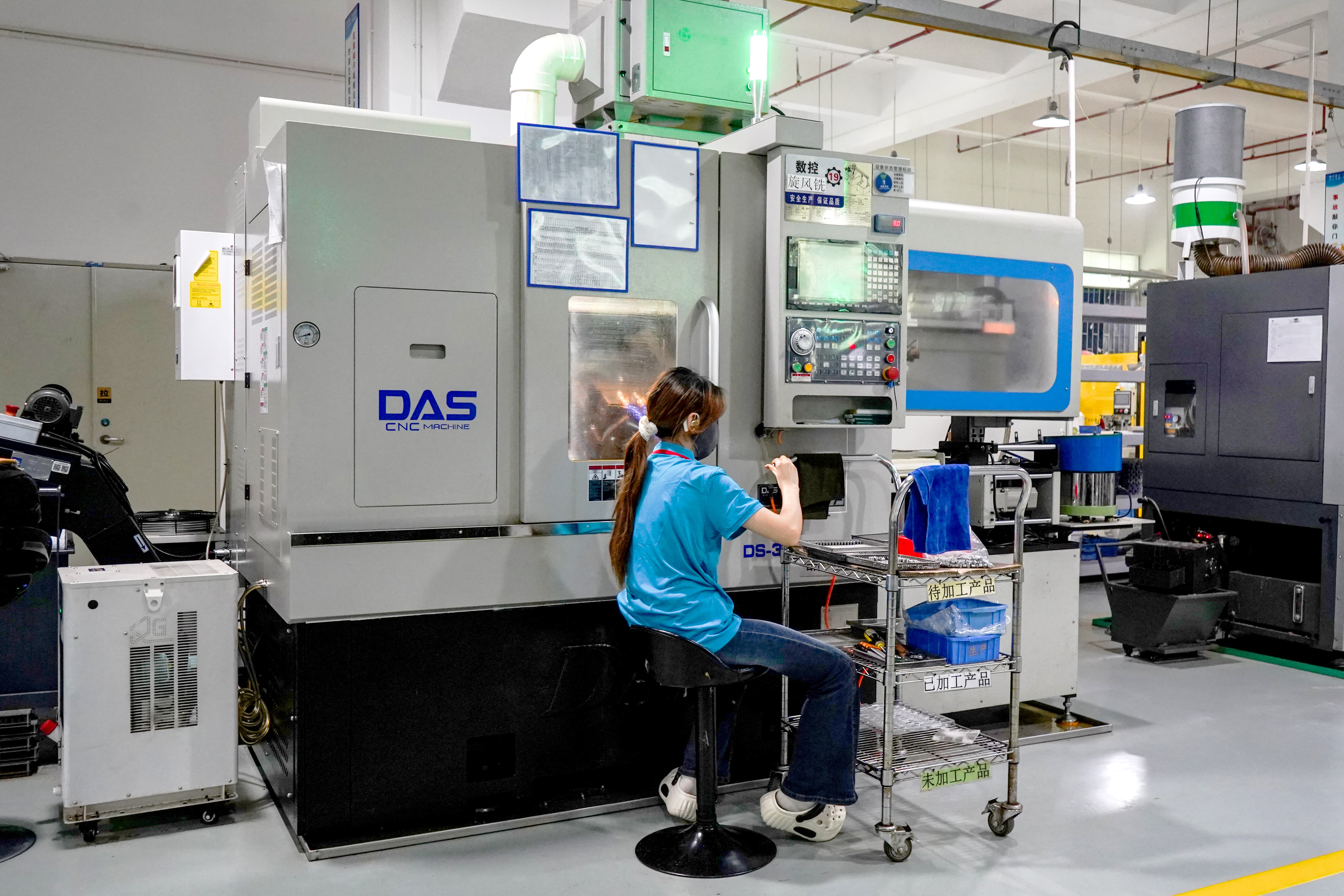
Gear machining and assembly control are part of the backlash question; the gearbox is not selected from a torque table alone.
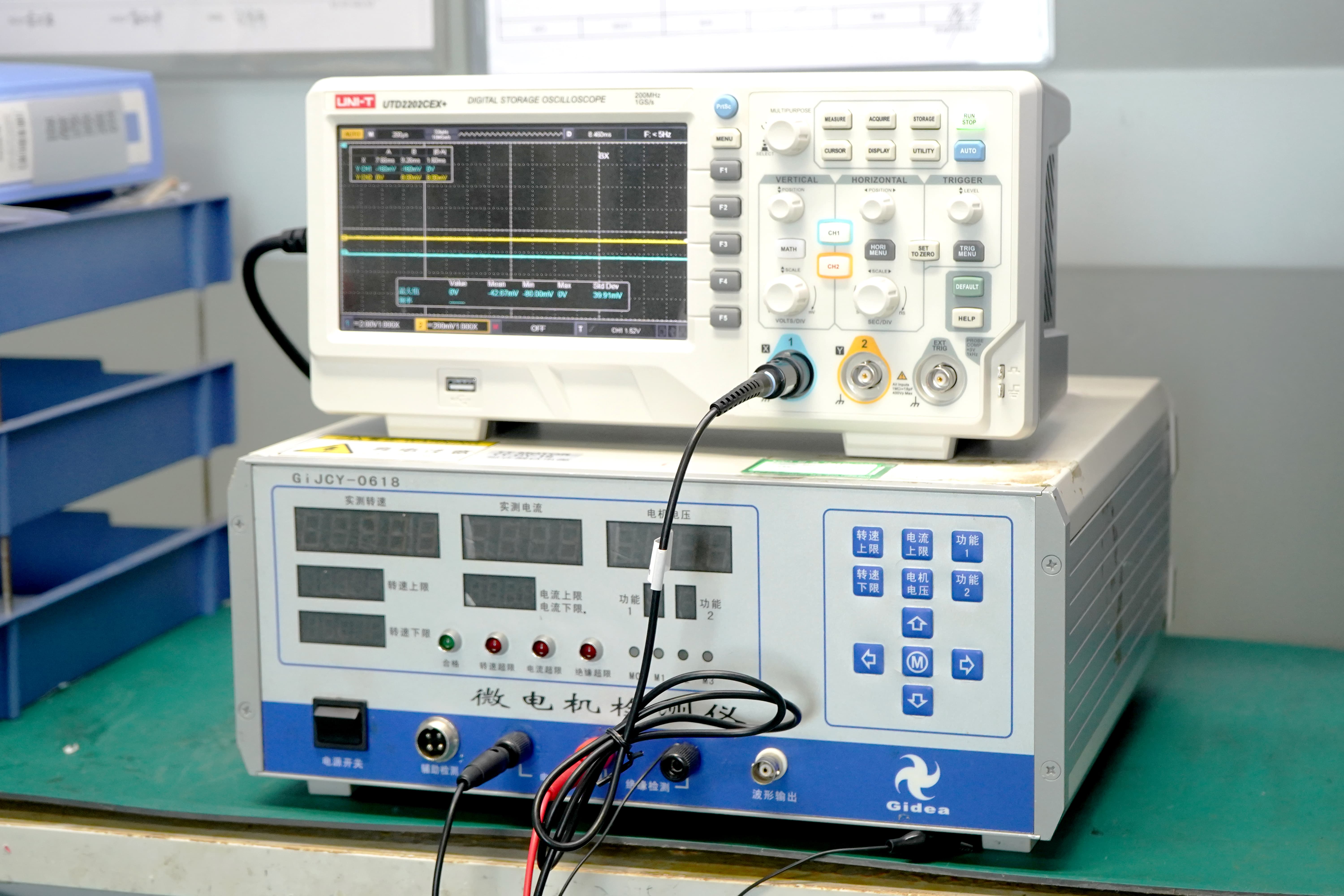
A motor test station supports the sample and acceptance checks that should accompany a backlash-sensitive design.
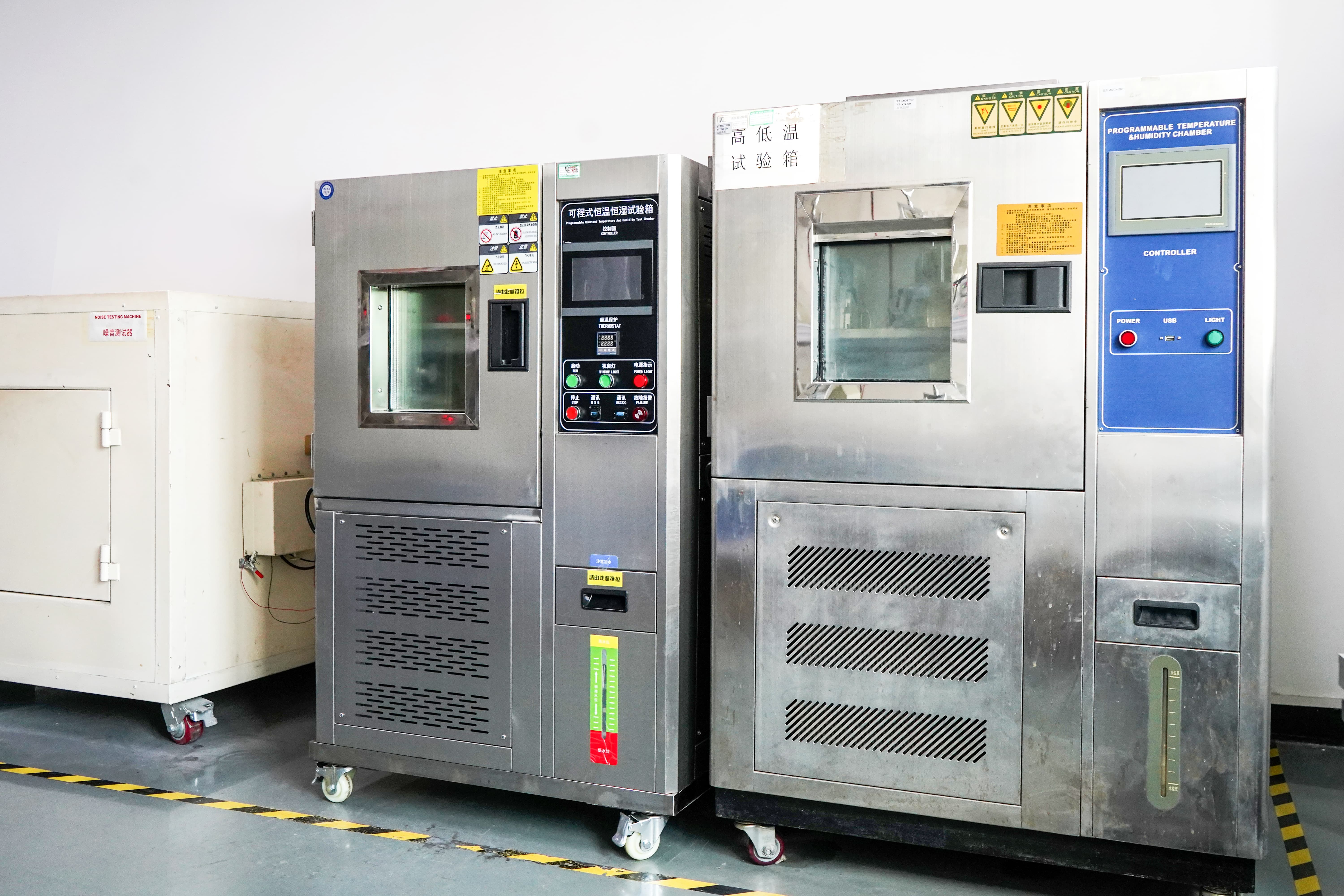
Environmental testing helps confirm that the selected gear motor remains suitable for the intended operating conditions.
FAQ
Do the GMP36-TEC3650 and TWG3246-TEC2430 have RoHS documentation?
Yes. The GMP36-TEC3650 is covered by SGS RoHS Compliance Test certificate CANEC26013325501, issued 2026-04-10, with a scope that includes DC gear motor models such as the GMP36-TEC3650 and related series models, with reference to RoHS Directive (EU) 2015/863 amending 2011/65/EU. The TWG3246-TEC2430 is covered by SGS RoHS Compliance Test certificate CANEC26013326101, issued 2026-06-24, with a scope that includes DC gear motor models such as the TWG3246-TEC2430 and related series models. The manufacturer also holds ISO 9001 certificate F02926Q00865R402, issued 2026-08-21 and valid to 2029-08-21, covering R&D and manufacture of micromotors including DC gear motors and DC brushless motors.
China brushless motor OEM manufacturers for custom DC designs: can TT Motor support this?
Yes. TT Motor provides OEM and ODM production services, with both production modes available for custom orders at the factory. The listed customization scope includes shaft, encoder, gearbox, voltage, logo, and speed. Quality control follows a 100% test procedure, with all units undergoing 100% testing as part of production inspection. For the GMP36-TEC3650, pre-shipment testing is required according to the available product information. A custom DC design request should therefore define the motor voltage, gearbox ratio, shaft, encoder, speed target, and acceptance method before the sample is built.
What is the minimum order quantity for these gear motors?
The listed minimum order quantity is 2 pieces, and the citable product-level example for the DC Gear Motor GM12-N20VA states a minimum order quantity of 2 units. The MOQ for a specific GMP36-TEC3650 or TWG3246-TEC2430 configuration should be confirmed with the supplier because shaft, encoder, gearbox, and voltage customization can change the production arrangement. MOQ is not the same as a price quotation; it only defines the smallest order quantity for the selected configuration.
How should samples and pre-shipment testing be handled?
The listed sample lead time is 15-25 days and bulk lead time is 30-45 days. For the GMP36-TEC3650, pre-shipment testing is required. A sample evaluation should include the output speed at the application load, the rated torque check, and a backlash measurement after direction reversal. The sample should be mounted in the same orientation as the final machine, because mounting stiffness and gravity load can change the measured lost motion. The acceptance record should state the measurement method, load condition, and pass or fail limit.
What should be included in the final acceptance record before mass production?
The final record should include the selected model, gearbox stage count, gearbox length, rated torque and output speed, the measured backlash at the output shaft, the test load and direction, and the pass or fail limit. It should also include the RoHS certificate reference for the selected model and the production inspection rule. TT Motor applies 100% testing to production output, and the available process information states that all units undergo 100% testing as part of production inspection. If the axis is still in evaluation, request a sample of the selected build and measure backlash on that sample before releasing the production order.
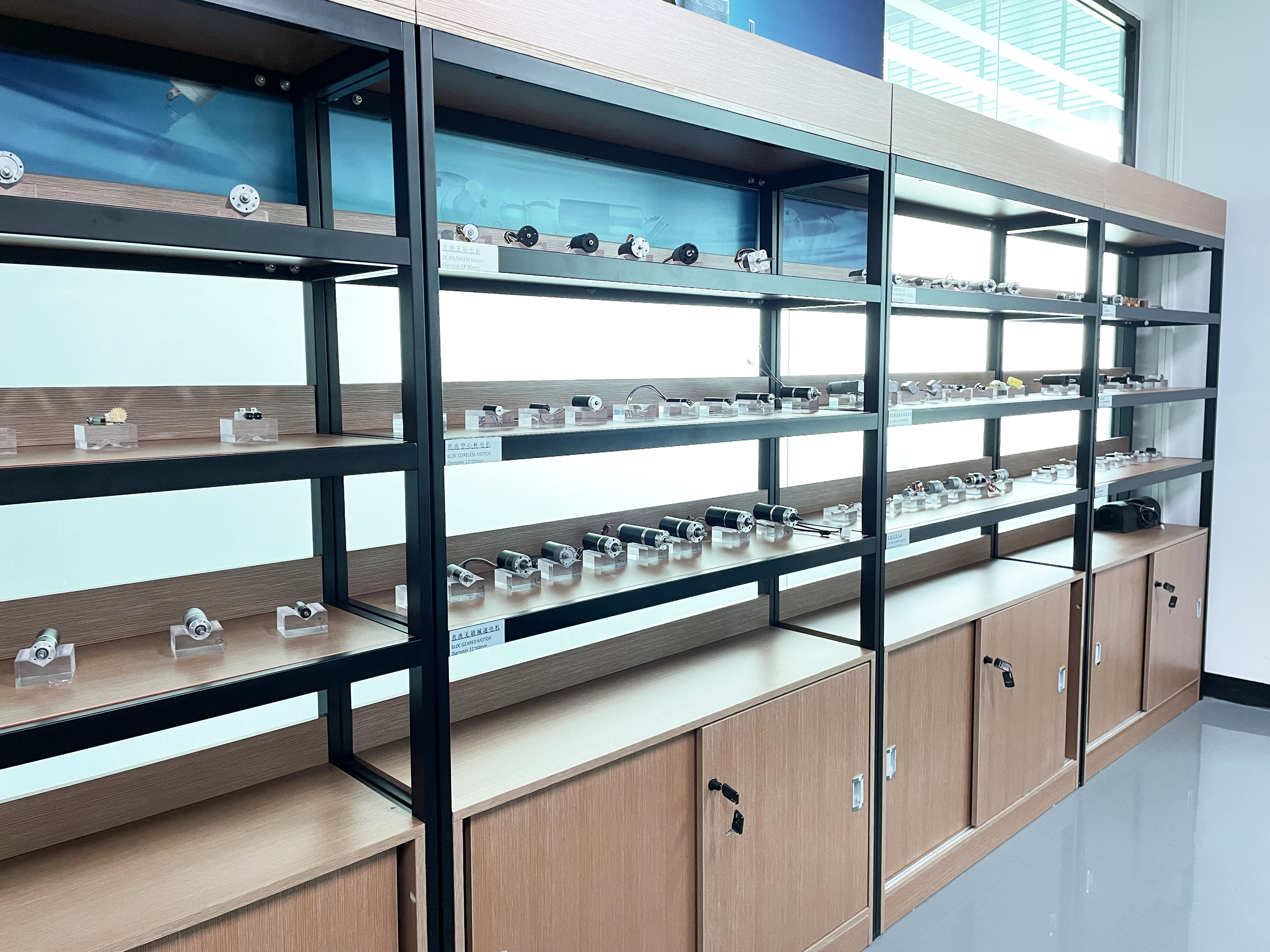
Sample evaluation is the right stage to measure backlash on the actual gear motor build, not after the production order is released.
Conclusion
Transmission backlash in a brushless planetary gear motor or a worm gear motor is not decided by the motor alone. The planetary build in the GMP36-TEC3650 brings 1-4 gearbox stages, gearbox length options of 26, 33.5, 40.5, and 47.5 mm, a rated torque ceiling of 30.0 kg.cm, and an output speed span of 4-1600 rpm. The integrated worm build in the TWG3246-TEC2430 brings a rated torque ceiling of 8.0 kg.cm and an output speed span of 3-35 rpm. Those parameters define the mechanical starting point, but the lost-motion result still depends on tooth accuracy, stage count, preload, output bearing stiffness, mounting, and the test method.
The practical selection rule is to define the output backlash budget first, then compare the architecture, stage count, torque ceiling, speed span, gearbox length, and acceptance test against the actual mechanism. A wider speed span and higher torque ceiling do not prove lower backlash, and a low-speed worm reduction does not prove better positioning. The design should be locked only after the sample has been tested at the application load and the measured backlash has been accepted against a stated limit.
For the factory overview, capability details, and motor series list, the public TT Motor brochure is available as a PDF: TT Motor product brochure.
Have Questions or Need More Details?
Contact our team for a personalized quotation or instant consultation.
Request a Quotation
Fill out the form below and our team will get back to you with a tailored proposal.
WhatsApp Direct Chat
Prefer to chat in real-time? Message us on WhatsApp for instant assistance & quick answers.
- Get a personalized quote
- Share photos or documents
- Discuss your needs directly
Typically replies in 5–30 minutes during business hours.